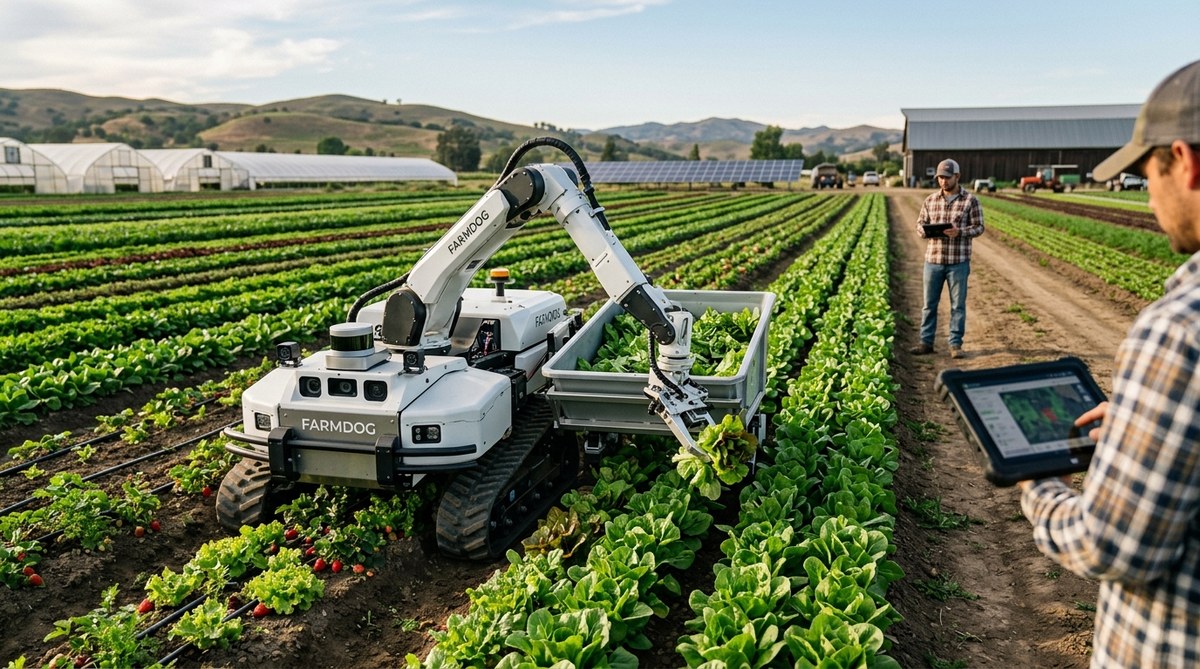
Finding reliable farm labor has only gotten harder. And more expensive. In 2026, many growers across the United States are facing a simple math problem: rising wages, tighter margins, and not enough hands to bring in the crop. You have probably felt that pressure yourself. The good news is that automated harvesting robots have moved from experimental labs to working fields. These machines are not science fiction anymore. They are real tools that can lower your labor costs and keep your harvest moving when workers are hard to find.
Automated harvesting robots can cut labor costs by 20 to 40 percent while running around the clock during peak season. In 2026, these machines have become more affordable and reliable than ever for American farms. This practical guide covers the real purchase and operating costs, step by step implementation strategies, and common pitfalls to avoid. You will learn exactly how to make robotic automation work for your farm in 2026.
The Real Cost of Hand Harvesting in 2026
Hand harvesting is getting more expensive every year. In many parts of the country, the minimum wage has climbed past $15 an hour. Some states are pushing toward $18 or $20. And wages tell only part of the story.
You also have to pay for housing, transportation, and worker insurance. There are recruitment fees and training costs. Then there is the biggest cost of all: lost crop value when you cannot find enough pickers at the right time. A delayed harvest can mean lower quality, shriveled fruit, or rotting vegetables in the field.
Consider strawberries. A typical hand harvesting crew costs a grower between $4,000 and $6,000 per acre each season. That adds up fast on a 50 acre farm. You are looking at $200,000 to $300,000 just for labor in one crop cycle.
Now compare that to a robotic harvester. A single machine can cover one to two acres per day depending on the crop. It does not call in sick. It does not need overtime pay. It works at night with lights. And it keeps going through the entire harvest window without breaks.
The numbers start to make sense very quickly.
How Automated Harvesting Robots Work on a Real Farm
Most harvesting robots use a combination of computer vision, a robotic arm, and a gentle gripping mechanism. The machine rolls through the field, scans each plant, identifies ripe produce, and picks it with care.
The computer vision system uses cameras and sensors to spot color, size, and shape. It can tell the difference between a ripe tomato and one that needs two more days on the vine. The robotic arm then reaches in, grips the fruit or vegetable, and places it into a collection bin.
Some machines use suction cups. Others use soft rubber fingers. A few models use a gentle cutting motion for things like lettuce or melons.
The operator’s main job becomes supervision. You monitor the robots from a tablet or smartphone. You move them between fields. You handle any clogs or mechanical hiccups. One person can oversee three or four robots at once.
That changes your labor math in a big way.
5 Steps to Start Using Harvesting Robots on Your Farm
Ready to try robotic harvesting? Here is a practical path that works for most operations.
-
Audit your current labor costs. Get the real numbers. Add up wages, housing, transportation, worker comp, and lost crop income from labor shortages. Know your baseline before you buy anything. This number will help you decide what machine price makes sense for your farm.
-
Pick one crop and one field to start. Do not try to automate everything at once. Choose a crop where labor is tightest or where a robot is proven. Strawberries, apples, citrus, and lettuce all have mature robotic options in 2026. Start with a single field so you can learn without risking your whole harvest.
-
Research machine specifications for your exact crop. Not all robots work on all crops. Some are built for vine crops. Others work on tree fruit. Check the robot’s throughput per hour, its picking accuracy, and its damage rate. Ask the manufacturer for references from growers with similar conditions.
-
Plan your field layout for robotic access. Robots need consistent spacing, even rows, and clear paths. You may need to adjust your planting pattern or trellis system. Some growers widen their rows by a few inches to give robots room to move. These changes pay off in smoother operation and higher picking speeds.
-
Run a side by side trial for one season. Keep your hand crew in the same field and let the robot work a section. Compare the costs, the quality, and the speed. Measure everything. You will see exactly where the robot saves money and where it still needs improvement. Use that data to decide on a larger rollout.
What These Machines Actually Cost
The price of harvesting robots varies a lot by crop type, capability, and brand. Here is a realistic look at what you can expect to pay and what you get back.
| Machine Type | Purchase Price | Labor Savings Per Season | Payback Period |
|---|---|---|---|
| Small berry picker | $25,000 to $40,000 | $12,000 to $18,000 | 2 to 3 seasons |
| Medium row crop robot | $50,000 to $80,000 | $25,000 to $40,000 | 2 to 4 seasons |
| Large tree fruit robot | $80,000 to $150,000 | $40,000 to $70,000 | 2 to 3 seasons |
| Multi arm vineyard unit | $100,000 to $200,000 | $50,000 to $90,000 | 2 to 4 seasons |
These numbers assume you run the machine for the full harvest window each year. If you only use it for a few weeks, the payback period stretches out. But most growers find that robots pay for themselves within three to four years.
And there are other savings. You spend less on recruiting. You reduce your housing burden. You stop worrying about last minute no shows during critical picking days.
Some manufacturers offer lease options, too. You can pay per acre or per season instead of buying the machine outright. That lowers the upfront risk and lets you test the technology before committing fully.
Common Mistakes to Avoid When Adopting Harvesting Robots
Growers who succeed with robots do a few things differently. Here are the most common traps and how to avoid them.
-
Buying too much machine too soon. A giant robot that works on 100 acres might be overkill for a 20 acre farm. Start smaller. Scale up after you learn the system. You can always add more units later.
-
Ignoring field prep. Robots need clean rows, level ground, and consistent plant spacing. If your field is uneven or your rows curve too much, the machine will struggle. Spend the time to prep your fields before the robot arrives.
-
Skipping the training period. Your team needs hands on time with the machine before harvest starts. Schedule a training day with the manufacturer. Let your operators practice in a low stress environment. A well trained operator gets 30 percent more output from the same robot.
-
Expecting 100 percent perfection right away. No robot picks everything perfectly in the first season. There will be missed fruit. There will be occasional damage. Expect an 85 to 90 percent success rate in year one and watch it improve as you fine tune the settings.
-
Forgetting about backup plans. Robots break down. They get stuck in mud. They get tangled in vines. Always keep a small hand crew available during peak harvest. That way you are covered if a machine goes down on a critical day.
Expert Advice on Making the Switch
I spoke with Mark Torres, a third generation strawberry grower in California who started using harvesting robots two years ago. Here is what he had to say.
“The biggest surprise was how much the robot changed our whole operation. We thought it would just replace pickers. But it also let us plant later and harvest longer. The machine didn’t get tired, so we could run it into the night when the weather was cooler. Our fruit quality actually went up. The key was giving the robot a full season to prove itself. The first year was okay. The second year was great. Give it time and do not give up after a few glitches.”
That advice rings true for many early adopters. The learning curve is real, but the payoff grows with each season.
Connecting Robots to Your Broader Farm System
Harvesting robots do not exist in a vacuum. They work best when you connect them to your overall farm management approach. That means feeding data from the robots back into your planning systems.
For example, a robot can map yield variability across a field. It knows exactly which rows produced more fruit and which ones lagged behind. You can use that information to adjust fertilizer, water, and soil management next season. This is where the real value grows beyond just labor savings.
If you are already using precision tools on your farm, adding a harvesting robot creates a natural data loop. The robot learns from the soil and plant data you collect, and your agronomic decisions get better because of the harvest data the robot provides. Consider how integrating AI powered tools for smarter crop management can help you get even more value from your robotic investment.
The same goes for your irrigation and sensor systems. A robot that knows the moisture levels in each row can adjust its picking pattern to avoid compacting wet soil. When you pair these technologies, the whole farm becomes more efficient. Smart sensors already help you manage water use. Adding a robot that can act on that information is the next logical step.
And do not overlook the role of farm data platforms. Modern harnessing IoT devices to transform modern farming practices means your robot can send real time data to a dashboard on your phone. You see exactly how many pounds per hour each machine is picking, which rows are underperforming, and when a battery is running low. That visibility lets you make smart decisions in the moment.
Your Labor Budget in a Robotic Future
Think about what your labor budget could look like three years from now. With two or three robots running through each harvest, you might reduce your seasonal crew by half. That is not just wage savings. That is fewer housing units to maintain. Fewer vehicles to run. Less paperwork and fewer headaches.
The savings free up money for other investments. Maybe you put it into better soil health. Maybe you maximize crop yields with precision farming technologies. Maybe you take your family on a real vacation for the first time in years.
The farms that adopt robotic harvesting now are building a long term advantage. Labor shortages are not going away. Wages will keep rising. The farms that can produce more with fewer people will be the ones that thrive.
Start small. Gather the data. Learn the machine. And let the robot earn its place in your field one season at a time. Your bottom line, and your peace of mind, will thank you.
