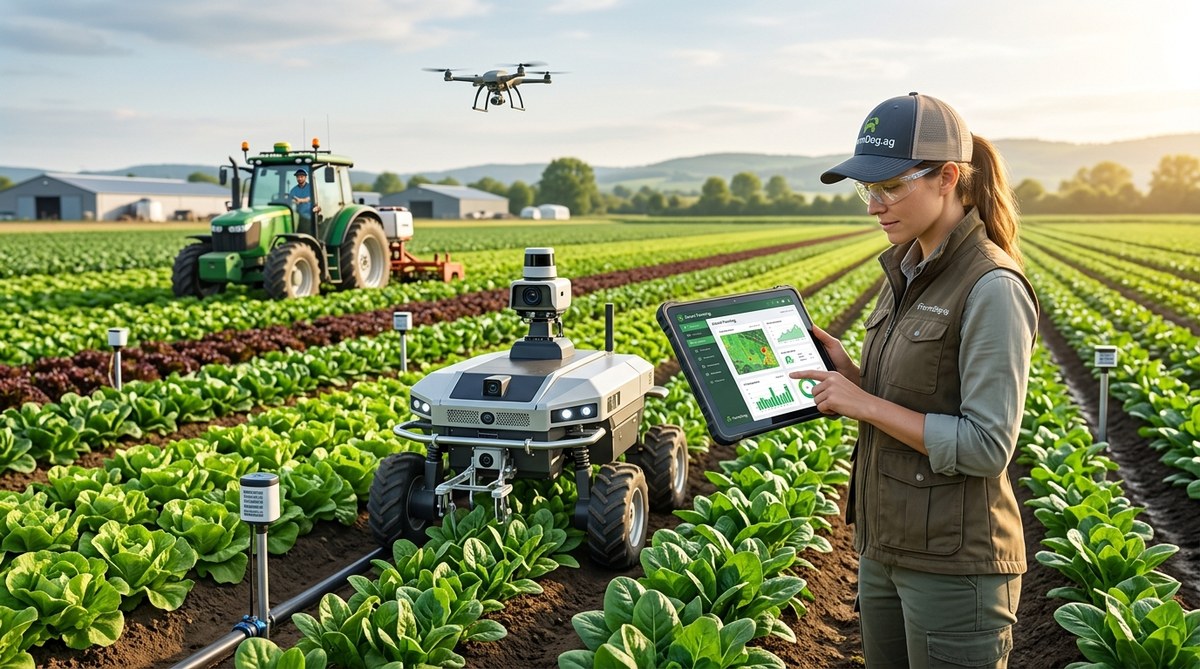
Agriculture is at a turning point. Farmers and researchers now have access to powerful AI-driven tools that can revolutionize how crops are managed. These innovations help increase yields, optimize resource use, and reduce environmental impacts. With AI’s ability to analyze vast data and provide actionable insights, crop management becomes more precise and less guesswork. This guide walks you through how integrating AI-powered tools can make your farming smarter and more sustainable.
AI-powered tools are transforming crop management by providing real-time insights, automating tasks, and helping farmers make data-driven decisions. These innovations boost productivity and sustainability, making farming more efficient and environmentally friendly.
Understanding the Role of AI in Modern Crop Management
Artificial intelligence is changing the way farmers approach crop production. Instead of relying solely on experience or traditional methods, farmers now use AI tools to interpret data from sensors, satellites, drones, and weather forecasts. These technologies work together to give a clear picture of crop health, soil conditions, and environmental factors. As a result, farmers can act early to prevent problems, optimize inputs, and improve overall yields.
AI in crop management spans numerous applications. From predicting pest outbreaks to automating irrigation, these tools help make farming practices more precise and less resource-intensive. The goal is to create a sustainable cycle where crop productivity is maximized without overusing water, fertilizers, or pesticides.
Practical Steps for Implementing AI-powered Tools in Crop Management
-
Assess Your Farm’s Needs
Identify areas where AI can add the most value. Are pests a recurring problem? Is water management a challenge? Understanding your specific issues helps you select the right AI tools. -
Gather and Integrate Data Sources
Collect data from various sources such as soil sensors, weather stations, satellite imagery, and drones. Integrate these data streams into a single platform for analysis. -
Choose Appropriate AI Solutions
Select AI tools tailored to your needs. For instance, use disease detection apps for crop health or predictive models for yield forecasting. Many platforms now offer user-friendly interfaces suitable for different farm sizes. -
Train Your Team and Automate Processes
Ensure your staff understands how to interpret AI insights. Automate routine tasks like irrigation or fertilization based on AI recommendations to save time and resources. -
Monitor, Evaluate, and Adjust
Regularly review AI outputs to verify accuracy. Adjust your strategies based on outcomes and new data. Continuous learning enhances the effectiveness of AI tools over time.
Popular AI-powered Techniques and How They Improve Crop Management
| Technique | What It Does | Common Mistakes | How to Avoid Them |
|---|---|---|---|
| Satellite imagery analysis | Monitors large-scale crop health and growth patterns | Over-reliance on outdated images | Use the latest imagery and combine with ground truth data |
| Soil sensor data interpretation | Provides real-time soil moisture, pH, and nutrient info | Ignoring sensor calibration | Regularly calibrate sensors for accurate readings |
| Pest and disease detection apps | Identifies early signs of infestations | False positives from poor image quality | Use high-resolution images and multiple sources |
| Predictive analytics for yields | Forecasts crop yields based on current data | Overfitting models to historical data | Incorporate diverse datasets and validate models regularly |
| Automated irrigation systems | Adjusts watering based on weather and soil data | Overwatering or underwatering | Set conservative thresholds and monitor system performance |
“The key to success with AI tools is understanding their limitations and combining them with traditional knowledge. This hybrid approach leads to smarter decision-making,” advises Dr. Lisa Garcia, an agricultural data scientist.
The Benefits of Integrating AI in Crop Management
- Increased productivity: AI enables early detection of pests and diseases, reducing crop losses.
- Resource optimization: Precise water, fertilizer, and pesticide application minimizes waste.
- Cost savings: Automating routine tasks reduces labor and input costs.
- Sustainability: Using data-driven insights promotes environmentally responsible farming.
- Risk mitigation: Forecasting weather and crop health helps prepare for adverse conditions.
Practical Processes to Maximize the Impact of AI Tools
-
Start Small and Scale Up
Pilot AI applications on a portion of your farm. Once proven effective, expand usage gradually. -
Invest in Training and Support
Ensure your team understands how to operate new tools and interpret data. Many vendors offer tutorials and ongoing support. -
Maintain Data Quality
Accurate insights depend on high-quality data. Regularly calibrate sensors and verify data sources. -
Collaborate with Experts
Partner with agri-tech companies or research institutions for tailored solutions and best practices. -
Stay Updated on Innovations
AI technology evolves quickly. Keep up with the latest tools and techniques through industry publications and conferences.
Clarifying Techniques and Common Mistakes
| Technique | Common Mistakes | Correct Approach |
|---|---|---|
| Remote sensing | Using outdated images | Update data frequently and combine with ground observations |
| Machine learning models | Overfitting | Use diverse datasets and validate models periodically |
| Sensor deployment | Poor calibration | Regularly calibrate sensors and maintain equipment |
| Data integration | Fragmented data sources | Use centralized platforms for seamless data consolidation |
Expert Advice on Building a Smarter Farming System
“Integrating AI tools is not about replacing traditional practices but enhancing them. Farmers who understand their unique farm conditions and combine AI insights with hands-on experience will see the greatest benefits,” emphasizes John Miller, an agritech consultant.
Unlocking the Future of Farming with AI
The potential of AI-powered tools extends beyond immediate crop management. They can help develop climate-resilient varieties, optimize supply chains, and improve overall farm sustainability. As these technologies become more accessible, farmers of all sizes can leverage them to stay competitive and environmentally responsible.
Your journey toward smarter crop management begins with understanding your farm’s specific needs and selecting suitable AI solutions. Start small, learn continuously, and adapt as new innovations emerge. The future of farming is here, and AI is making it brighter and more sustainable for everyone.
Growing Smarter with AI for Better Harvests
Harnessing AI-powered tools for crop management offers a practical way to improve productivity and sustainability. By integrating data-driven insights into daily practices, farmers can make smarter decisions that benefit both their farm and the environment. As you explore these technologies, remember that combining AI with traditional knowledge creates a resilient and efficient farming system. Embrace this shift and watch your crops thrive like never before.
