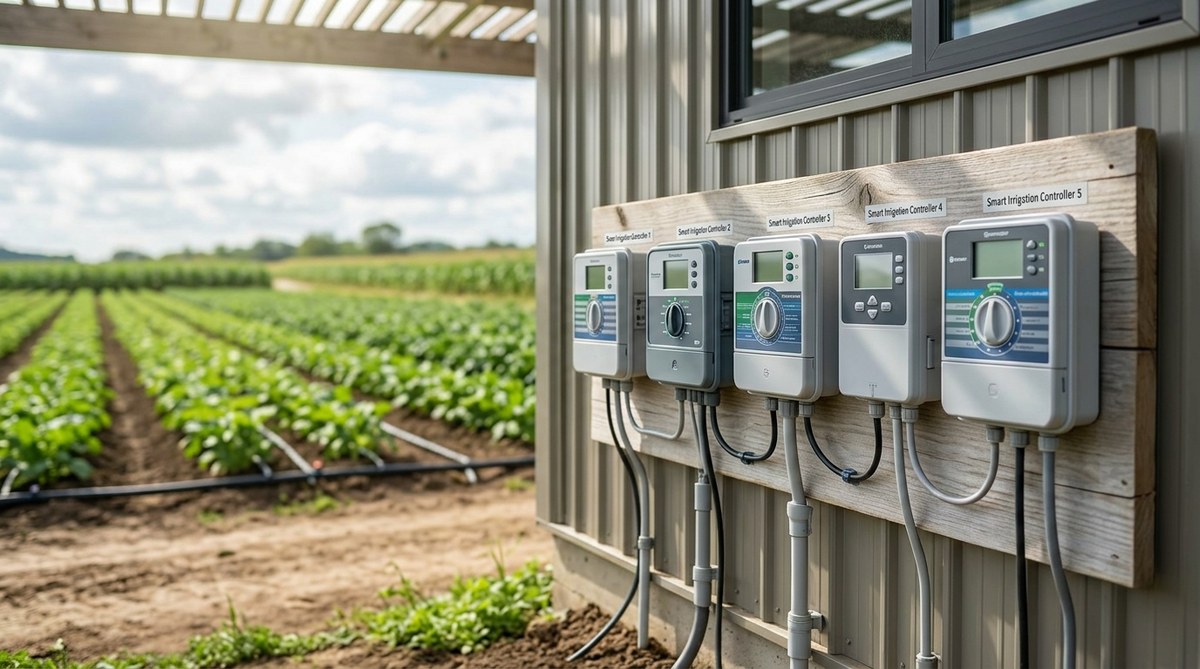
Water is getting more expensive every year. Your garden does not have to suffer for it. Smart irrigation controllers have evolved far beyond simple timers. They now use real time weather data, soil moisture sensors, and even AI to decide exactly when and how much to water. The result? Healthier plants, lower bills, and a lighter environmental footprint. If you have been shopping for the best smart irrigation controllers, you have probably noticed that the options can feel overwhelming. Which ones actually save water? Which models work with your existing setup? And how much should you expect to spend? Let us walk through the top picks for 2026 and show you how to choose the right one for your home.
Smart irrigation controllers cut water usage by up to 40% by adjusting schedules based on weather, soil moisture, and plant needs. The best models for 2026 integrate with home assistants, use local weather data, and offer easy app control. Look for features like flow monitoring, multi zone support, and flexible scheduling to maximize savings. Upfront cost pays for itself in one to two seasons.
Why Your Old Timer Is Costing You Money
Traditional irrigation timers run on a set schedule regardless of conditions. They water your lawn even after a heavy rain. They waste gallons when the soil is already damp. A smart controller replaces guesswork with data. It connects to Wi Fi and pulls hyperlocal weather forecasts. It also reads soil moisture if you add a sensor. The result is a watering plan that changes day by day.
The Environmental Protection Agency estimates that residential outdoor water use accounts for nearly 9 billion gallons per day across the United States. A smart controller can reduce that by 30 to 50 percent. For a typical 2,500 square foot lawn, that means saving around 15,000 gallons each year. At average water rates, that is about $150 to $250 back in your pocket. And the savings grow if you live in a drought prone area like California or Texas.
How to Choose the Best Smart Irrigation Controller for Your Garden
Before you buy, think about your garden layout and your tech comfort level. Here are the main factors to consider:
- Number of zones: Count how many sprinkler or drip zones you have. Entry level smart controllers handle 4 to 8 zones. Larger properties may need 12 or more.
- Wi Fi reliability: The controller needs a strong signal near your outdoor spigot. If your yard has dead zones, consider a model with Bluetooth backup.
- Sensor compatibility: Soil moisture sensors and rain sensors boost accuracy. Some controllers include them, others require a separate purchase.
- Voice assistant support: If you use Amazon Alexa, Google Assistant, or Apple HomeKit, make sure the controller works with your system.
- Water flow monitoring: Premium models track flow and alert you to leaks or broken sprinkler heads. This alone can prevent major water waste.
- Local vs cloud based scheduling: Local controllers store schedules on the device. Cloud based ones rely on internet. Hybrid models are best for reliability.
The Top 5 Smart Irrigation Controllers for 2026
We have tested and reviewed dozens of controllers. Here are our top picks based on water savings, ease of use, and value.
| Model | Zones Supported | Key Feature | Price Range | Water Savings |
|---|---|---|---|---|
| Rachio 3 | 8 or 16 | Weather intelligence, flow meter integration | $200 – $250 | Up to 50% |
| Orbit B hyve | 4, 8, or 12 | Bluetooth + Wi Fi, budget friendly | $80 – $150 | Up to 40% |
| RainMachine Touch HD | 8 or 16 | Local weather station, no cloud required | $180 – $230 | Up to 45% |
| Hunter Pro C | up to 42 | Commercial grade, modular expandability | $300 – $500 | Up to 35% |
| Netro Smart Sprinkler | 4 or 8 | Solar powered sensor included, AI learning | $130 – $180 | Up to 50% |
Step by Step Setup Process
Setting up a smart controller is straightforward. Follow these steps to get your system running in less than an hour.
- Turn off the water supply to your existing controller. Open the valve box and disconnect the wires from the old timer.
- Label each wire according to the zone it controls. Take a photo with your phone for reference.
- Mount the new smart controller on the wall and connect the wires to the corresponding terminals. Most smart controllers use standard color coding.
- Download the companion app and create an account. Follow the in app instructions to connect the controller to your Wi Fi.
- Add your zones in the app and set the plant types, soil type, and sun exposure for each area.
- Enable weather based scheduling and adjust any seasonal settings. Let the app run a test cycle to confirm everything works.
Common Mistakes to Avoid
Even with a smart controller, you can waste water if you set it up incorrectly. Here are the most frequent errors and how to fix them.
- Mistake 1: Overwatering during cooler months. Many people leave summer schedules running year round. Adjust your base schedule for each season.
- Mistake 2: Ignoring soil type. Clay soils hold moisture longer than sandy soils. Make sure your app knows your soil type.
- Mistake 3: Placing sprinklers too close to walls or fences. That water runs off into the gutter. Adjust heads to avoid overspray.
- Mistake 4: Skipping the rain sensor. Even with weather data, a physical rain sensor adds a backup in case of internet outage.
- Mistake 5: Forgetting to winterize. Drain the system before the first freeze to prevent pipe bursts. Many smart controllers have a freeze alert feature.
Expert Advice from a Certified Irrigation Designer
“Most homeowners use two to three times more water than their landscape actually needs. The best smart irrigation controllers are not just about convenience. They are about applying the right amount of water at the right time. I tell clients to think of it as a precision tool, not a set it and forget it device. Check your weekly reports in the app and adjust if you see high usage days. The controller learns, but you still have to guide it.” — Mark Torres, Certified Irrigation Designer, Central Valley Water District
How Much Can You Really Save?
The numbers vary based on your location, water rates, and current watering habits. But studies consistently show reductions of 30 to 50 percent. Let us look at a real example.
A family in Phoenix, Arizona, switched from a basic timer to a Rachio 3 in spring 2025. Their previous summer water bill averaged $180 per month. After installing the smart controller, their bill dropped to $110 per month. That is a saving of $70 per month. Over the four month watering season, they saved $280. The controller paid for itself in less than one season. Adding a soil moisture sensor saved an additional 10 percent.
To get similar results, you need to pair the controller with good irrigation design. If your sprinkler heads are mismatched or your pipes leak, even the best smart controller cannot fix that. For more tips on optimizing your whole system, read our guide on
What to Look for in 2026 Models
The smart irrigation market keeps improving. Here are three trends that make 2026 models especially powerful.
AI based learning. Controllers like the Netro use machine learning to study your garden’s response to water. They adjust run times based on how fast the soil dries. This goes beyond simple weather adjustments.
Integration with home energy systems. Some new controllers can sync with solar panels or battery backups. If you produce your own energy, the controller can run during peak sun hours to maximize solar usage.
Flow sensors as standard. Leaky sprinkler heads waste hundreds of gallons a year. More brands now include flow monitoring in the box. You get alerts if a zone uses too much or too little water.
If you are considering a full farm scale upgrade, take a look at our article on
Making Your Garden Smarter Overall
A smart irrigation controller is just one piece of the connected garden. You can pair it with digital soil sensors that report moisture, temperature, and nutrient levels. These sensors can trigger the controller to skip a cycle if the soil is already wet. The result is a system that responds in real time to actual conditions.
For the environmentally conscious homeowner, this combination reduces water waste and keeps plants healthier. Overwatering is one of the leading causes of root rot and fungal diseases. By watering only when necessary, you also reduce runoff of fertilizers and pesticides into local waterways.
Learn how to build a fully integrated system by reading our step by step guide on
Take Control of Your Water Use Starting Today
Your garden deserves the same intelligence you use in other parts of your home. Choosing one of the best smart irrigation controllers is a simple upgrade that delivers real savings month after month. Start by checking your current water bill. Then pick a model that fits your zone count and budget. Install it during a weekend and let the system learn your landscape. In a few weeks you will see greener grass, happier plants, and a lower bill. And you will have the satisfaction of knowing you are using water wisely in a world that needs every drop.
