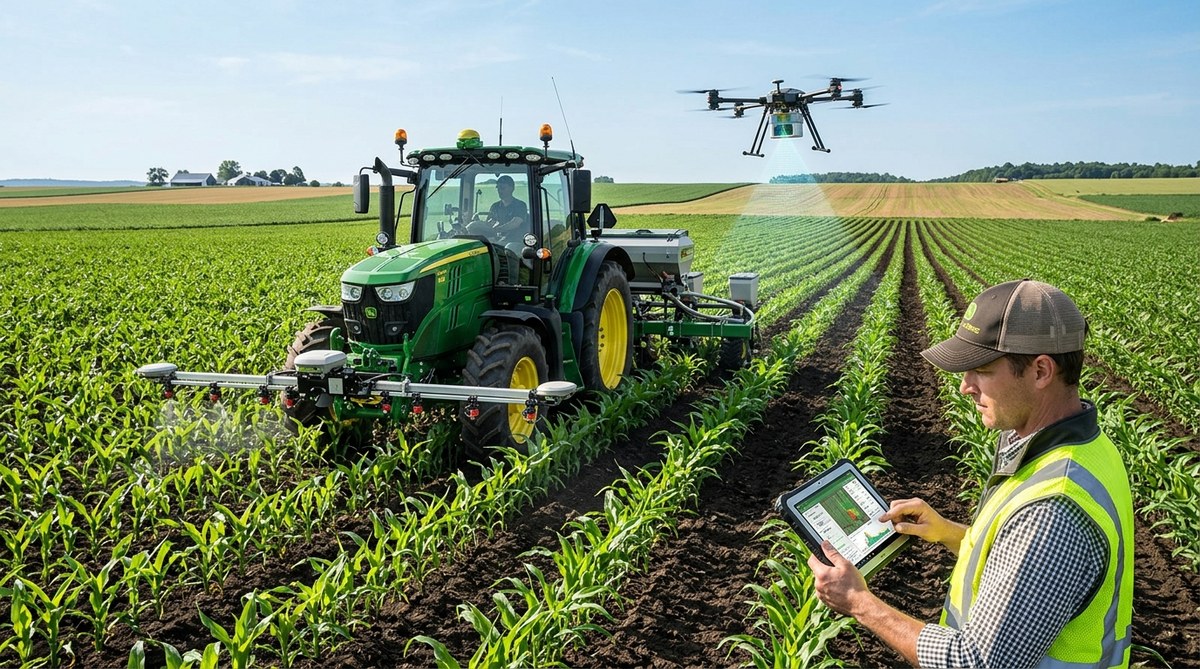
Agricultural professionals looking to boost crop yields now have a powerful arsenal of precision farming technologies at their fingertips. These tools enable smarter decision-making, optimize resource use, and reduce waste. By integrating advanced technology solutions into daily operations, farmers can achieve higher productivity and sustainability. Whether you’re managing a large farm or conducting crop research, understanding and applying these innovations can transform your approach and improve outcomes significantly.
Precision farming technologies harness data, automation, and targeted practices to improve crop yields. Implementing these tools thoughtfully can lead to more efficient resource use and sustainable farm management.
Understanding precision farming technologies for crop yields
Precision farming involves using specific tools and systems to monitor, analyze, and manage crop production at a detailed level. It’s about moving away from broad, one-size-fits-all approaches to targeted actions based on real-time data. This shift results in better resource allocation, healthier crops, and ultimately higher yields.
Technologies such as GPS-guided equipment, remote sensing, soil sensors, drones, and machine learning algorithms are transforming the way farmers operate. They provide insights into soil health, crop development, weather patterns, and pest pressures, enabling proactive responses.
Key tools driving crop yield improvements
1. GPS-guided machinery and automation
GPS technology ensures that planting, fertilizing, and harvesting are precise and consistent. Automated systems reduce overlaps and missed areas, resulting in uniform crop growth. Farm machinery equipped with GPS can adapt to variable field conditions, saving time and reducing input costs.
2. Remote sensing and drone imaging
Satellites and drones capture high-resolution images of fields. These images reveal variations in crop health, moisture levels, and pest infestations. Crop monitoring becomes more accurate, allowing for timely interventions. Using remote sensing data helps identify problem zones that need specific attention.
3. Soil sensors and variable rate technology
Soil sensors measure moisture, pH, and nutrient levels directly in the field. This information guides variable rate technology (VRT) applications, which adjust fertilizer and water inputs based on specific needs. VRT minimizes waste and enhances crop nutrition where it’s needed most.
4. Data management and analytics platforms
Collecting data is only part of the process. Advanced platforms analyze this information to generate actionable insights. They help plan planting schedules, predict yields, and optimize input use. With user-friendly dashboards, farmers can make informed decisions quickly.
5. Machine learning and AI
Artificial intelligence processes vast amounts of farm data to forecast weather impacts, disease outbreaks, and yield potential. Machine learning models continuously improve as they process more data, offering increasingly accurate guidance.
Practical steps to implement precision farming for better yields
- Assess your farm’s needs and goals: Identify specific challenges such as uneven soil fertility, water management issues, or pest problems.
- Invest in suitable technologies: Start with cost-effective tools like soil sensors or drone imagery and expand based on results.
- Collect and analyze data regularly: Use platforms that integrate data from various sources for a comprehensive view.
- Apply targeted interventions: Adjust input applications based on insights, focusing resources on areas that need them most.
- Monitor and refine: Continuously review data and crop performance to fine-tune your practices.
Common pitfalls and how to avoid them
| Technique | Mistake | How to avoid it |
|---|---|---|
| GPS-guided machinery | Over-reliance on automation | Regular calibration and manual checks |
| Remote sensing | Ignoring ground truth data | Combine imagery with field inspections |
| Soil sensors | Poor placement or maintenance | Rotate sensor locations and maintain equipment |
| Data platforms | Data overload | Focus on key metrics and set alerts |
| AI models | Overfitting or inaccurate predictions | Use diverse data sets and validate models |
“Integrating precision farming tools is not just about technology. It’s about changing management practices and adopting a data-driven mindset that values continuous learning and adaptation.” — Expert agronomist
Combining technologies for maximum impact
The real power of precision farming comes from integrating multiple tools. For example, pairing soil sensors with GPS-guided equipment allows for site-specific fertilizer application. Using drone imagery with analytics platforms helps identify pest hotspots and target treatments precisely.
This synergy reduces input costs while increasing crop health. It also helps in maintaining soil health and conserving water. The goal is to create a responsive system where data informs decisions at every stage of crop production.
Looking ahead with smart farming innovations
Advances such as internet of things (IoT) devices and machine learning are making precision farming more accessible and effective. Automated equipment connected through IoT can make real-time adjustments, reducing labor and improving consistency.
Research continues to develop new sensors and algorithms tailored to different crops and environments. These innovations promise even more precise and sustainable farming practices in the future.
Final thoughts on harnessing technology to boost crop yields
Adopting precision farming technologies is a smart move for farmers aiming to maximize productivity sustainably. Start small, test different tools, and build your system gradually. Remember, data is only useful if you act on it.
By integrating these advanced systems into your farm management, you can make smarter decisions, reduce waste, and increase your crop yields. Staying curious and open to new technologies will keep your farm competitive and resilient.
Cultivating success with precision agriculture
Implementing precision farming solutions isn’t just about technology — it’s about transforming how you work. Use the data and insights to fine-tune your practices continuously. Over time, this approach leads to healthier crops, higher yields, and a more sustainable farm.
Keep experimenting, learning, and adapting. The future of farming belongs to those who leverage data-driven strategies to grow better crops with less waste. Your efforts today can lead to a more productive and environmentally friendly tomorrow.
