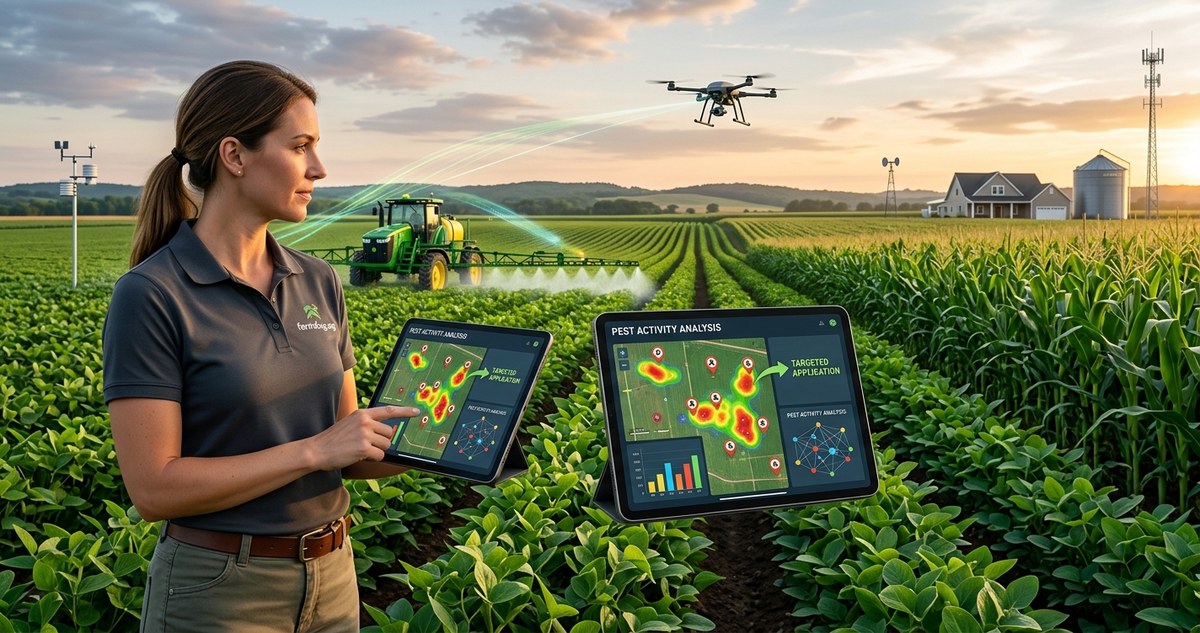
Pest management remains one of the biggest challenges in agriculture. Traditional methods often rely on guesswork, which can lead to overuse of pesticides or missed infestations. Now, data analytics is transforming how farmers and crop scientists approach pest control. By harnessing the power of data, they can make smarter decisions that save time, reduce costs, and protect the environment. This shift toward data-driven pest management opens new doors for sustainable farming practices and higher yields.
Data analytics for pest management enables precise, timely interventions by analyzing pest patterns, environmental factors, and crop health data. This approach minimizes pesticide use, increases effectiveness, and promotes sustainable farming practices.
Understanding the Role of Data Analytics in Pest Control
Data analytics in pest management involves collecting, analyzing, and interpreting vast amounts of information related to pest populations, environmental conditions, and crop health. The goal is to predict pest outbreaks before they happen and implement targeted interventions. This proactive approach reduces unnecessary pesticide applications and supports integrated pest management strategies.
How Data Analytics Transforms Pest Management
Data-driven pest control offers several advantages. It allows for early detection of pest threats, improves application timing, and helps farmers understand pest behavior patterns. As a result, farmers can reduce pesticide reliance, lower costs, and minimize environmental impact. Plus, with the right data, crop scientists can develop better pest-resistant varieties and refine control methods.
Practical Steps to Implement Data Analytics for Pest Management
- Collect relevant data from multiple sources including weather stations, pest traps, satellite imagery, and field sensors. Use https://farmdog.ag/harnessing-iot-devices-to-transform-modern-farming-practices/ to understand how IoT devices contribute to data collection.
- Use analytics tools to process and analyze this data. Focus on identifying patterns, correlations, and potential pest outbreak indicators.
- Apply predictive models to forecast pest emergence and spread. Adjust pest control strategies based on these forecasts for maximum effectiveness.
Key Techniques in Data Analytics for Pest Control
| Technique | Description | Common Mistakes |
|---|---|---|
| Predictive modeling | Uses historical data to forecast pest outbreaks | Relying on outdated data, ignoring environmental changes |
| Geospatial analysis | Maps pest populations across fields | Overlooking small-scale variations, poor data resolution |
| Machine learning | Automates pattern recognition in complex datasets | Insufficient training data, overfitting models |
| Environmental monitoring | Tracks weather, humidity, temperature | Failing to integrate data from different sources |
“Integrating real-time data and predictive analytics can transform pest management from reactive to proactive,” emphasizes Dr. Jane Smith, an agricultural data scientist. “Farmers who adopt these tools see significant reductions in pesticide use and healthier crops.”
Common Challenges and How to Overcome Them
Despite its benefits, implementing data analytics faces hurdles. Limited access to technology, lack of data literacy, and high initial costs hinder adoption for some farmers. To address these issues:
- Collaborate with local agricultural extension services for training.
- Invest in affordable sensors and data collection tools.
- Begin with small-scale pilot projects to demonstrate value.
Practical Process for Using Data Analytics in Pest Management
- Gather Data: Collect environmental, pest, and crop health data regularly.
- Analyze Data: Use software to identify trends and anomalies.
- Forecast and Act: Predict pest outbreaks and apply targeted controls.
By following these steps, you can create an integrated pest management plan rooted in data insights. Remember, the key is to use data to inform decisions before pests become a serious problem.
Common Pest Management Techniques and Their Pitfalls
| Technique | How Data Analytics Enhances It | Mistakes to Avoid |
|---|---|---|
| Calendar-based spraying | Timing based on pest life cycles | Ignoring environmental cues |
| Broad-spectrum pesticide use | Targeted interventions based on pest density | Over-reliance leading to resistance |
| Trap monitoring | Analyzing trap catch data for trends | Delayed response to rising pest numbers |
Expert Advice on Data-Driven Pest Control
“Data analytics turns pest management into a science. It helps you act precisely where and when it matters most,” advises Mark Johnson, a veteran crop scientist. “Farmers who embrace data-driven strategies see benefits in crop health, cost savings, and environmental impact.”
Future Outlook: Smarter Pest Management with Technology
As technology advances, integrating artificial intelligence and machine learning will further improve pest prediction accuracy. Satellite imaging, drones, and IoT sensors will provide real-time data streams. These innovations will enable farmers to react quickly and efficiently, reducing pesticide use and supporting sustainable agriculture practices.
Final Thoughts: Putting Data to Work in Your Fields
Harnessing data analytics for pest management is no longer optional; it’s becoming essential. By systematically collecting and analyzing data, you can stay ahead of pests and protect your crops more effectively. Start small, learn from each season, and gradually incorporate more advanced tools. With the right approach, data-driven pest management can become your farm’s biggest strength.
How to Get Started with Data Analytics in Pest Management
Begin by assessing your current pest control methods. Identify gaps where data can add value. Invest in sensors or collaborate with local agencies to access weather and pest data. Use simple analytics tools to interpret your findings and inform decisions. Over time, expand your data sources and analytical capabilities. The key is to stay curious and committed to continuous improvement.
By adopting a data-centric mindset, you can improve pest control strategies, reduce pesticide reliance, and support sustainable farming. Remember, every bit of data collected brings you closer to smarter, more efficient pest management.
Ready to turn your pest control practices into a science? Start integrating data analytics today and see the difference it makes on your farm.
