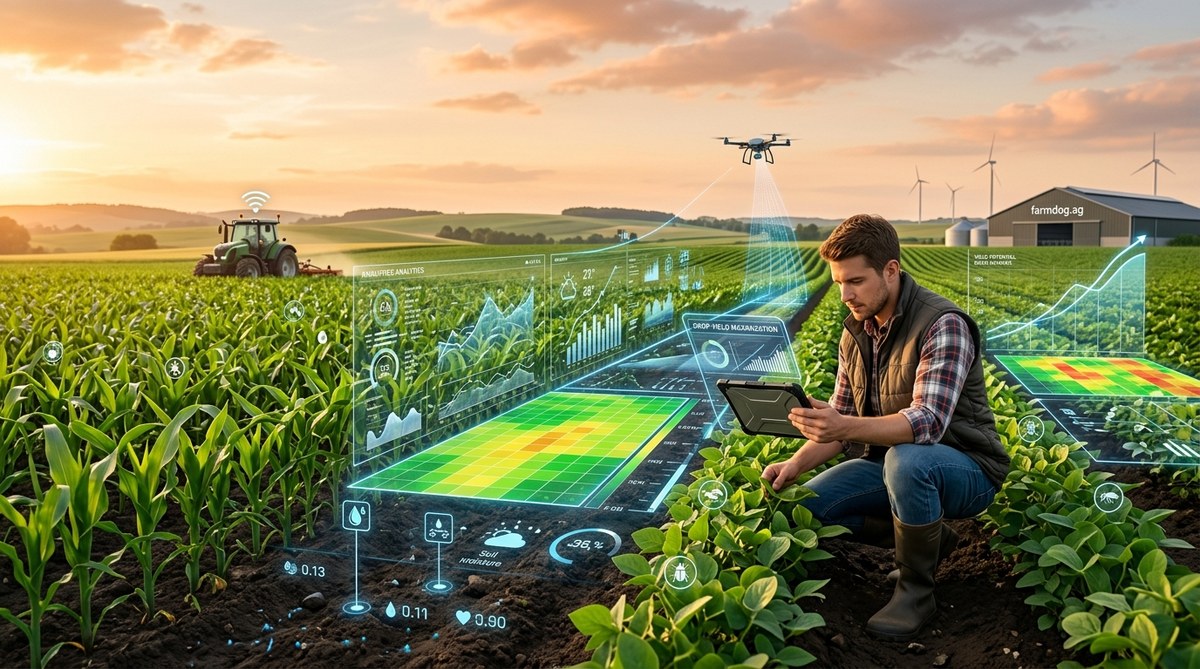
Harnessing the power of data analytics has become a game changer for farmers and agronomists aiming to increase crop yields. With advances in technology, collecting and analyzing data from soil sensors, weather stations, satellite images, and machinery has never been easier or more impactful. Using these insights, farmers can optimize every aspect of crop production, reduce waste, and improve profitability. This guide will walk you through practical strategies for harnessing data analytics to maximize your crop yields.
Using data analytics for crop yields involves collecting detailed information from various sources, analyzing it to identify patterns and trends, and applying insights to make informed decisions. This approach helps optimize planting, fertilization, irrigation, and pest control, leading to healthier crops and higher productivity.
How data analytics transforms crop yield management
Data analytics is reshaping agriculture by providing precise, actionable insights. Instead of relying solely on experience or guesswork, farmers now leverage data to make smarter choices at every stage. By integrating data analytics into routine practices, you can identify the best planting times, optimize resource use, and anticipate issues before they become costly problems.
Practical strategies for using data analytics to boost crop yields
Applying data analytics effectively involves a structured approach. Here are key steps every farmer or agronomist can follow:
1. Collect comprehensive and accurate data
Start by gathering data from multiple sources. These might include soil sensors measuring moisture, nutrient levels, and pH; weather stations tracking temperature, rainfall, and wind; satellite imagery providing crop health insights; and equipment logs recording planting and harvesting dates. The more diverse and precise your data, the better your analysis will be.
2. Analyze data to uncover actionable insights
Use analytical tools to process your data. Techniques like trend analysis, correlation studies, and predictive modeling can reveal patterns. For example, analyzing soil moisture and weather data may indicate the optimal irrigation schedule. Similarly, satellite images can highlight areas of stress or disease early enough for intervention.
3. Apply insights to enhance decision-making
Translate your analysis into practical actions. For example, if data shows certain sections of your field are nutrient-deficient, adjust fertilization accordingly. If weather forecasts predict dry spells, plan irrigation in advance. Regularly review your data and refine your practices to adapt to changing conditions.
4. Monitor results and refine your approach
Continuously collect data and evaluate outcomes. Track how changes influence yields and resource use. Use this feedback loop to fine-tune your strategies, ensuring ongoing improvement and resilience against unpredictable factors.
Key data analytics techniques and common pitfalls
Understanding the right techniques and avoiding mistakes is vital for success.
| Technique | Description | Common Mistakes |
|---|---|---|
| Descriptive analytics | Summarizes current data to understand what is happening | Relying on outdated or incomplete data |
| Predictive analytics | Uses historical data to forecast future outcomes | Overfitting models or ignoring external influences |
| Geospatial analysis | Maps crop health and soil conditions | Misinterpreting satellite images without ground truth |
| Machine learning models | Automate pattern detection and predictions | Using complex models without proper validation |
“The most valuable insights come from combining multiple data sources and continuously validating your models. Keep it simple and focus on what directly impacts your yields,” advises agritech expert Dr. Susan Miller.
Common mistakes to avoid
Even with the best intentions, some pitfalls can hinder progress:
- Relying solely on anecdotal observations without data support
- Ignoring data quality and sensor calibration issues
- Overcomplicating models without understanding their limitations
- Failing to act on insights promptly
Embracing a data-driven mindset for better harvests
Switching to a data-centric approach requires a mindset shift. It’s about trusting facts over assumptions and being willing to adapt practices based on evidence. As you integrate data analytics into your routine, you’ll notice more consistent yields, reduced input costs, and better resource management.
Making data analytics work for your farm
Implementing data analytics is not as complex as it sounds. Here are some practical tips:
- Start small by focusing on a single crop or field
- Invest in affordable sensors and user-friendly software
- Collaborate with local agronomists or data specialists
- Regularly review your data and stay updated on new tools and techniques
- Share your experiences with other farmers to learn and improve
By gradually building your data capabilities, you’ll develop a robust system that continually enhances your crop management.
A future where data guides every decision
As technology advances, data analytics will become even more integral to farming. From real-time alerts to autonomous machinery, the possibilities are expanding. Staying ahead means embracing these tools now and integrating them into your farming practices.
Final thoughts on maximizing crop yields with data
Applying data analytics for crop yields is a practical way to improve your farming results. It involves collecting quality data, analyzing it carefully, and applying insights effectively. Remember, the goal is to make smarter decisions that lead to healthier crops and higher harvests. Start with small steps, stay consistent, and watch your farm thrive.
By adopting a data-driven approach, you prepare your farm for a resilient and productive future. Your crops and your bottom line will thank you.
