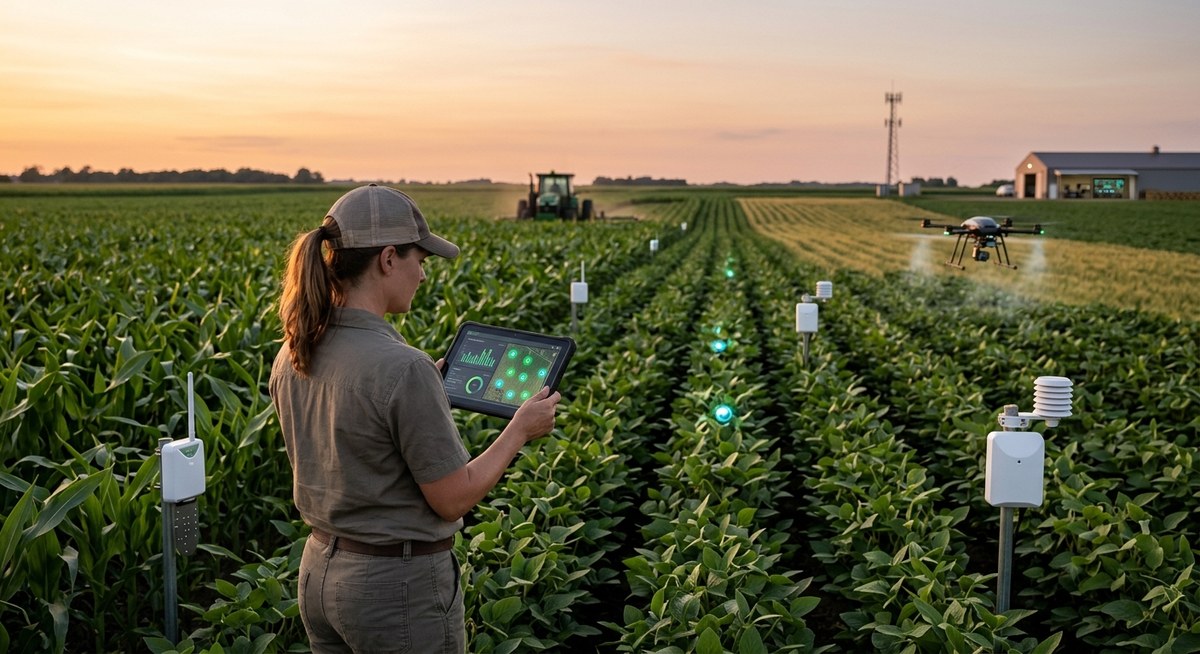
Farmers and agricultural pros are increasingly turning to Internet of Things (IoT) technology to change how they work. IoT devices help gather real-time data, automate processes, and improve decision-making. This shift is making farms more efficient, sustainable, and profitable. With the right tools, you can manage resources better, boost yields, and reduce waste. IoT in modern farming isn’t just a trend; it’s a game changer.
IoT in modern farming connects devices and sensors to data streams, helping farmers optimize resources, increase productivity, and improve sustainability. It’s a practical way to innovate farming practices today.
Unlocking the Power of IoT in Modern Agriculture
The integration of IoT devices into farming practices offers a practical path toward smarter, more sustainable agriculture. Imagine sensors that monitor soil moisture, weather conditions, and crop health in real time. Or automated irrigation systems that adjust watering schedules based on data. These innovations help farmers make more informed choices, reducing waste and boosting productivity.
IoT is transforming agriculture from traditional practices to data-driven operations. It allows farms to operate more precisely, respond faster to environmental changes, and spend resources more wisely. As technology becomes more affordable and accessible, even small farms are beginning to benefit.
The Core Areas Where IoT Makes a Difference
IoT devices have a wide range of applications in modern farming. Here are some key areas changing the game:
Precision farming and crop management
Farmers can use sensors to monitor soil health, moisture levels, and crop growth. Data helps decide when to plant, irrigate, fertilize, or harvest. This targeted approach conserves resources and maximizes yields.
Livestock health and tracking
Wearable sensors on animals provide insights into health, activity, and location. Farmers can detect illnesses early and optimize grazing patterns, leading to healthier herds and better productivity.
Water and environmental management
Smart irrigation systems adjust watering based on weather forecasts and soil moisture. Environmental sensors track conditions like temperature and humidity, helping prevent issues like drought stress or disease outbreaks.
Greenhouse automation
IoT devices control temperature, humidity, and light inside greenhouses. This creates ideal growing conditions year-round, boosting crop quality and reducing energy use.
Data-driven decision making
All these applications generate valuable data. Farmers can analyze trends and patterns to refine their practices. This data-driven approach leads to smarter, more sustainable farming.
Practical Steps to Implement IoT on Your Farm
Starting with IoT may seem overwhelming, but a straightforward process can guide the transition:
-
Identify your needs: Determine which areas of your farm could benefit most from data insights or automation.
-
Choose suitable devices: Select sensors, controllers, and software tailored to your goals. For example, soil moisture sensors for irrigation or livestock trackers for animal health.
-
Set up a network: Ensure your farm has reliable internet or local connectivity. Many IoT devices operate on Wi-Fi, cellular, or LoRaWAN networks.
-
Collect and analyze data: Use cloud-based platforms or farm management software to view and interpret data. This helps you make informed decisions quickly.
-
Automate where possible: Implement automated systems for irrigation, ventilation, or feeding based on sensor data. Automation saves time and reduces errors.
-
Refine practices: Continuously monitor results and adjust your strategies accordingly. IoT makes ongoing improvement possible.
Practical Tips for Successful IoT Adoption
-
Start small: Focus on a specific problem or area before expanding. This minimizes risk and allows learning.
-
Prioritize data security: Protect your data and devices from cyber threats with strong passwords and secure networks.
-
Train your team: Ensure everyone understands how to use new technology and interpret data.
-
Maintain devices regularly: Keep sensors and systems calibrated and updated to ensure accuracy.
-
Leverage expert advice: Consult with agri-tech specialists or visit farms that have successfully adopted IoT solutions.
Common Techniques and Mistakes in IoT Farming
| Technique | Mistake |
|---|---|
| Using sensors for real-time monitoring | Relying solely on data without field validation |
| Automating irrigation based on soil moisture | Ignoring weather forecasts can lead to overwatering |
| Analyzing historical data for trend spotting | Overlooking data security risks |
| Integrating multiple devices into a cohesive system | Not maintaining or calibrating sensors regularly |
“The key to successful IoT adoption in farming is starting small and scaling gradually. Focus on practical issues and use data to guide decisions rather than replace experience.” — Agri-tech expert
Key Benefits of Embracing IoT in Farming
- Resource efficiency: Precise watering, fertilizing, and pest control reduce waste.
- Higher yields: Timely interventions based on data lead to better crop production.
- Labor savings: Automation reduces manual tasks and frees up time.
- Environmental sustainability: Less water and chemical use lower environmental impact.
- Enhanced farm management: Real-time data improves decision-making and planning.
The Future of Farming with IoT
As IoT technology becomes more affordable and easier to use, its role in agriculture will only grow. Farms that adopt these tools stay competitive, resilient, and better equipped to face environmental challenges. Innovations like drone monitoring, AI-powered analytics, and autonomous machinery are on the horizon, further transforming farming practices.
By integrating IoT devices into your operations, you gain a clearer picture of your farm’s health and productivity. This approach helps you respond swiftly to issues, optimize resource use, and ultimately, grow more food with less waste.
Making Smart Farming a Reality
Implementing IoT in modern farming is not just about technology. It’s about changing mindsets and embracing ongoing learning. Start by assessing your farm’s needs and choosing devices that fit your scale and budget. Use data to inform your practices and be open to adjusting your strategies over time.
Remember, each farm is unique. What works for one may need tweaking for another. Collaborate with other farmers, attend workshops, and stay informed on new developments. IoT is a practical tool that, when used wisely, can make farming more sustainable and rewarding.
Final Thoughts on Growing Smarter
Transitioning to IoT-enabled farming practices might seem daunting initially. However, taking small, deliberate steps can lead to significant improvements. Focus on gaining insights, automating routine tasks, and making data-backed decisions. Over time, this approach will help you create a more resilient, efficient, and sustainable farm.
Harnessing IoT in modern farming isn’t just about technology. It’s about building a better future for your farm, your community, and the environment. Start today, and watch your farm thrive with smarter, data-driven practices.
