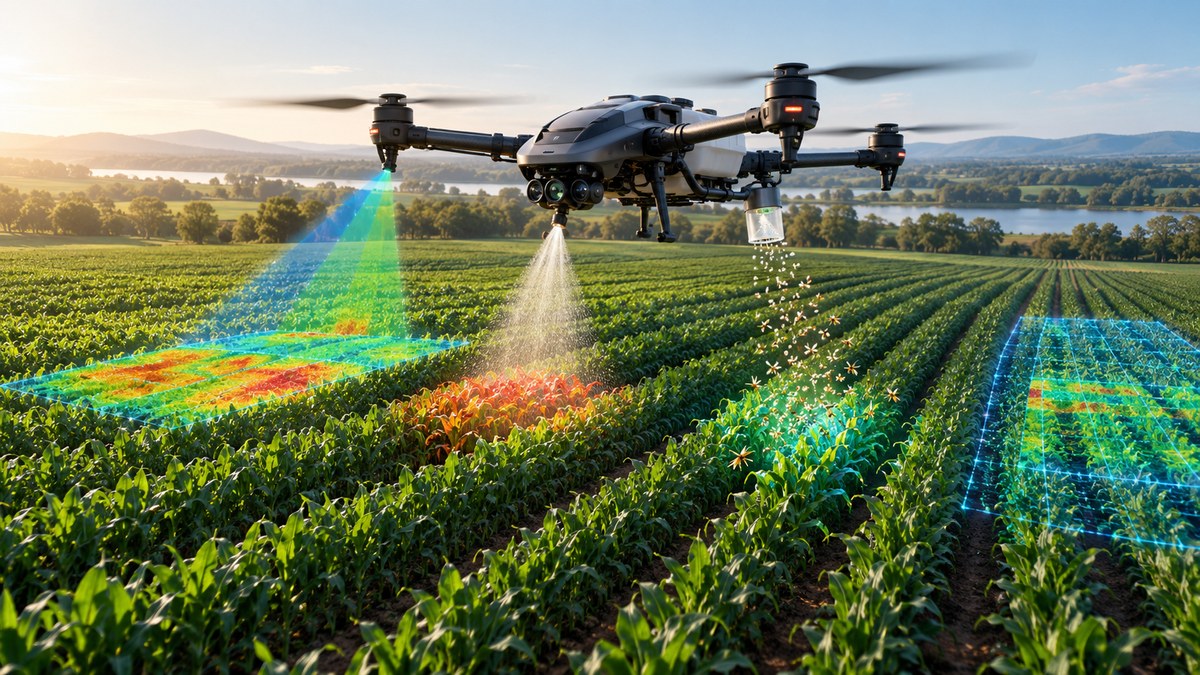
Pest pressure always finds a way. It adapts. It hides. And by the time you spot the damage, the infestation has often already spread. For years, the standard response was a blanket spray across the whole field. That approach wastes chemicals, harms beneficial insects, and drives up costs. But a new standard is here. In 2026, autonomous drones for pest control in agriculture offer a smarter path. They allow you to treat only the problem areas, with precision that was impossible just a few seasons ago.
Autonomous drones are no longer a futuristic concept for pest control. In 2026, they are a practical tool for targeted intervention. By using multispectral cameras, AI flight paths, and variable rate application, farm managers can cut chemical use by up to 40% while improving control. This guide covers five specific ways to deploy them today.
Why Targeted Pest Control Matters More in 2026
The days of spraying an entire 80-acre field for a pest that only lives in the southeast corner are fading. The economics no longer support it. Input costs for pesticides and fungicides have climbed, and regulatory pressure around drift and runoff is tighter than ever. At the same time, resistance to common chemistries is building in major pest populations like corn rootworm and soybean aphids.
This is where autonomous drones change the game. They do not replace your boots on the ground. They extend your eyes and your reach. A drone can fly a grid pattern over 100 acres in under an hour, identify stress zones using near-infrared imagery, and return to the exact GPS coordinates where treatment is needed. It is a shift from calendar-based spraying to response-based spraying.
The Five Ways to Deploy Autonomous Drones for Pest Control
Here are the five most effective strategies for integrating autonomous drones into your pest management program this year.
1. Early Detection with Multispectral Scouting
The best pest control is the one you apply before the population explodes. Multispectral sensors on a drone can detect changes in leaf reflectance that signal pest feeding stress days before the human eye sees browning or holes.
- Program the drone to fly a weekly survey route at 120 feet.
- Upload the flight path to your farm management software.
- Review the generated NDVI (Normalized Difference Vegetation Index) maps.
- Flag zones where reflectance drops below a healthy threshold.
- Deploy ground scouts only to those flagged zones for confirmation.
This method slashes scouting time. One Midwest corn grower reported cutting scouting labor by 60% after switching to drone-based detection. For a deeper look at how data analytics supports this process, check out our guide on harnessing data analytics to improve pest management strategies.
2. Spot Spraying with Variable Rate Technology
Once you know where the pest is, you do not need to treat the whole field. Autonomous drones equipped with precision spray systems can apply pesticide only to the affected zones. The drone carries a small tank, but because it treats only hotspots, that tank covers more ground.
The process works like this:
- Load the prescription map from your scouting flight into the drone’s flight controller.
- Set the spray rate for healthy vegetation to zero.
- Define the treatment threshold (e.g., apply when NDVI drops below 0.4).
- Launch the drone. It flies autonomously to each hotspot and applies a variable rate.
- The drone logs the volume applied per zone for your records.
This targeted approach can reduce pesticide use by 30% to 50% on many crops. It also keeps beneficial predator insects alive in the untreated areas, which supports long-term biological control.
3. Biological Agent Deployment
Not every pest problem needs a chemical solution. In 2026, many farms are using drones to release beneficial insects or microbial biopesticides. This is especially useful for crops like strawberries, tomatoes, and vine crops where beneficial predators are a key part of the program.
A drone can carry a hopper filled with parasitic wasps or predatory mites. It flies to pre-mapped release points and drops them evenly across the canopy. This is faster than walking the field with a bucket, and it distributes the agents more uniformly.
| Method | Coverage per Hour | Labor Required | Consistency |
|---|---|---|---|
| Manual release | 2 to 3 acres | 2 workers | Variable |
| ATV mounted release | 10 to 15 acres | 1 worker | Moderate |
| Autonomous drone release | 40 to 60 acres | 1 worker (supervisor) | High |
The table shows a clear advantage for drone deployment in both speed and consistency. For more on integrating these tools into a broader strategy, see our article on innovative pest management techniques for sustainable farming success.
4. Thermal Imaging for Subsurface Pests
Some pests do their damage below the canopy or even below the soil line. Root-feeding grubs, wireworms, and certain nematodes are hard to spot until the plant shows wilting. Thermal cameras on drones can detect subtle temperature differences in the soil and plant canopy that correlate with root damage.
Damaged roots cannot uptake water as efficiently. The plant closes its stomata, which raises leaf temperature. A thermal drone flight at midday can map these temperature anomalies. The result is a heat map that shows you exactly where to dig for confirmation. This technique is gaining traction in potato and carrot operations where soil pests cause significant losses.
5. Autonomous Swarm Coordination for Large Acreage
For farms over 500 acres, a single drone may not be enough. Swarm technology allows multiple autonomous drones to coordinate their flights without colliding. One operator can manage a fleet of three to five drones that divide a large field into sectors.
- Each drone communicates its position to the others via a mesh network.
- The lead drone uploads the mission plan, and the swarm self-assigns sectors.
- If one drone runs low on battery, it returns to the charging station, and the swarm redistributes its remaining area.
- The system logs each drone’s spray volume and flight path for compliance.
This approach is still emerging, but early adopters in the Central Valley of California are using swarms to treat large almond and citrus blocks during tight spray windows after rain events.
“The real value of autonomous drones is not just the technology. It is the data they generate. Every flight creates a record of where the pest was, how we treated it, and what the outcome was. That record is gold for next season’s planning.” – Dr. Elena Torres, Precision Agriculture Specialist at Cornell Cooperative Extension.
Common Mistakes to Avoid When Using Drones for Pest Control
Even with the best hardware, poor planning leads to poor results. Here are the most common errors and how to avoid them.
| Mistake | Why It Happens | Better Approach |
|---|---|---|
| Flying too low | Fear of missing spots | Fly at 100 to 120 feet for optimal sensor field of view |
| Ignoring wind | Drift and uneven coverage | Use onboard wind sensors and pause flights above 12 mph |
| Skipping ground truthing | False positives from sensor data | Always confirm with a scout in flagged zones |
| Using one map all season | Pest pressure shifts | Re-scan every 3 to 5 days during peak pressure |
Avoiding these pitfalls will save you time and money. If you are building out a full smart farm system, our guide on 7 steps to building a fully integrated smart farm system is a good next read.
Matching the Right Sensor to the Pest
Not all pests are visible with the same sensor. Choosing the wrong camera is like wearing sunglasses at night. Here is a breakdown of which sensor works for which pest type.
- Multispectral (NDVI/NDRE): Best for foliar feeding pests like spider mites, thrips, and aphids. Detects stress from reduced chlorophyll.
- Thermal: Best for root feeders and soilborne diseases. Detects canopy temperature rise from water stress.
- RGB (high resolution visible light): Best for visible damage like caterpillar feeding, leaf miners, and webworms. Useful for verification after a multispectral flag.
- LiDAR: Best for three dimensional canopy structure analysis. Useful for detecting pest damage that changes plant architecture, such as gall wasps.
Choosing the right sensor for your primary pest pressure will give you cleaner data and fewer false positives.
What to Look for in a 2026 Autonomous Drone System
If you are shopping for a system this year, here are the features that matter most for pest control work.
- RTK GPS for sub-inch accuracy. Without it, your spot spray map will not align with the drone’s flight path.
- Obstacle avoidance sensors. Fields have power lines, irrigation pivots, and trees. The drone needs to see them.
- Seamless API integration with your existing farm management software. If the data stays in the drone’s app, it is less useful.
- Hot swappable payloads. You want to switch from a multispectral camera to a spray tank in under five minutes.
- Battery life of at least 25 minutes under load. Anything less means too many trips back to the truck.
For a broader look at how drones fit into the larger precision farming picture, see our article on how to leverage drone technology for precision farming in 2026.
The Next Season Starts Now
Autonomous drones for pest control in agriculture in 2026 are not a novelty. They are a practical tool that saves money, reduces chemical load, and gives you better data. The key is to start small. Pick one field that has a recurring pest problem. Map it with a multispectral flight. Treat only the hotspots. Compare your input costs and your yield at harvest. The numbers will speak for themselves.
The technology is mature. The regulations are clearer. The only missing piece is your decision to try it. Your fields are ready. Your pests are not waiting. Get the drone in the air and see what you have been missing.
