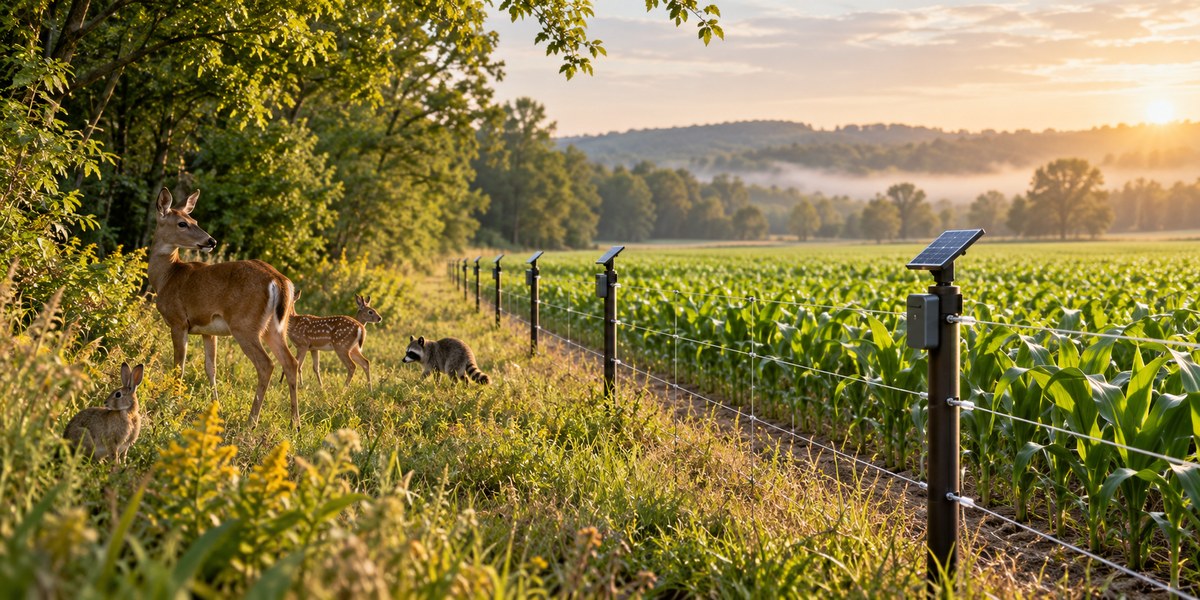
The first time a herd of deer wiped out your young soybean stand, you probably felt helpless. Maybe you tried propane cannons, but the neighbors complained. Perhaps you installed a traditional electric fence, only to find a fawn tangled in the wire the next morning. That gut punch of watching your hard work get eaten is real, and so is the worry about hurting the animals you are just trying to discourage.
The good news is that 2026 offers a better path. Smart fence systems for wildlife crop protection use sensors, lights, sounds, and mild physical cues to create a barrier that animals learn to avoid. These systems do not rely on lethal force or painful shocks. Instead, they use technology to outsmart the animals, keeping your crops safe and your conscience clear.
Smart fence systems combine motion sensors, lights, automated sounds, and low-impact deterrents to protect crops from wildlife without causing injury. They work for deer, boars, rabbits, and other common pests. These systems reduce crop loss by up to 80 percent while keeping animals safe. The technology is now affordable for small and medium farms.
How Smart Fence Systems Actually Work
A smart fence is not a single product. It is a layered system that uses different triggers to keep wildlife away. Most setups include three core parts:
- Sensing layer: Motion detectors, infrared cameras, or laser beams detect an animal approaching the perimeter.
- Response layer: Lights, ultrasonic sounds, water sprayers, or low-voltage pulses activate only when an animal is present.
- Control layer: A central hub or app lets you adjust settings, review activity logs, and change deterrent patterns.
The beauty of this approach is that animals do not get hurt. They get annoyed. A deer that triggers a flashing light and a high pitched tone will quickly learn that your field boundary is an unpleasant place to be. Over time, the animals stop trying.
5 Steps to Set Up a Non-Lethal Smart Fence
If you are ready to install a system on your land, follow this practical process. It works for fields of any size.
- Map your high risk zones. Walk your property and note where damage is worst. Focus on entry points near tree lines, water sources, and along known animal trails.
- Choose your deterrent type. Decide which method fits your main pest. Deer are spooked by sudden light and sound. Boars respond to water sprayers and physical barriers. Rabbits need a finer mesh combined with motion activated noise.
- Install the sensor line. Place motion detectors every 30 to 50 feet along the perimeter. Mount them at the height of the target animal. For deer, that is about 3 to 4 feet off the ground.
- Connect the response units. Link each sensor to a light or sound unit. Test every zone to confirm that a trigger in one area activates the correct response.
- Monitor and adapt. Check the activity log on your phone each week. If animals start ignoring a certain deterrent, change the pattern. Smart fences learn from you.
Common Mistakes to Avoid When Installing Smart Fences
Even the best technology fails if you set it up wrong. Here are the most frequent errors farmers make and how to fix them.
| Mistake | Why It Fails | The Fix |
|---|---|---|
| Using only one deterrent | Animals get used to a single stimulus | Rotate between lights, sounds, and water sprayers |
| Placing sensors too low | Small animals trigger false alarms, big animals slip through | Adjust sensor height for your target pest |
| Ignoring fence edges | Animals dig under or jump over gaps | Add a ground level sensor or buried wire |
| Setting and forgetting | Animal behavior changes over time | Review alerts weekly and adjust patterns |
Why Non-Lethal Fencing Wins for Your Farm and Your Neighbors
A lethal trap or a poison bait station might solve a problem for a week, but it creates new problems. Dead animals attract scavengers. Poison can harm pets, livestock, or children. Neighbors do not want to see carcasses near the property line.
Smart fence systems avoid all of that. They are humane by design. The animals learn to stay away without being injured. This matters more than ever in 2026, as consumers pay closer attention to how food is grown. If you sell at a farmers market or through a local co-op, you can honestly say you use non-lethal wildlife management. That is a selling point.
“We switched to a smart fence system two seasons ago. Our deer damage dropped by nearly 70 percent, and we have not had a single injured animal. It changed how we think about pest control.”
Mark T., vegetable grower in central Ohio
Matching the Right Deterrent to Your Pest
Different animals respond to different triggers. A system that works for rabbits will not stop a determined boar. Here is a breakdown of what works best for common North American crop pests.
- Deer: Sudden bright lights and loud ultrasonic bursts. Deer are creatures of habit. A surprise breaks their pattern.
- Wild boars: Low voltage pulses combined with a physical barrier. Boars are strong and smart. They need both a physical and a sensory deterrent.
- Rabbits and groundhogs: A fine mesh fence with motion activated water sprayers. These small animals can squeeze through gaps, so the barrier must be tight.
- Raccoons and opossums: Flashing lights and a smooth surface they cannot climb. They are clever but hate being exposed.
If you want to see how other smart farming tools can support your operation, take a look at our guide on harnessing IoT devices to transform modern farming practices. The same connectivity that powers your fence can also monitor soil moisture and weather.
What to Look for When Buying a Smart Fence System
The market has grown fast since 2024. Here is what matters when you compare options.
- Weather resistance. Your system will sit outside in rain, snow, and heat. Look for an IP65 rating or higher.
- Battery or solar power. Running power lines to a remote field edge is expensive. Solar powered sensors are reliable and easy to move.
- App control. You need to see alerts and change settings from your phone. A good app sends a push notification when a deer triggers the sensor at 2 AM.
- Expandability. Start with one field, but make sure you can add more zones later. Some systems support up to 100 sensors on a single network.
- Animal specific settings. The best systems let you choose a deer mode or a boar mode. This changes the height, sensitivity, and response automatically.
For a deeper look at how data can improve your decision making, read our post on top strategies for using data analytics to maximize crop yields. The same principles apply to wildlife management.
The Cost Picture in 2026
A basic smart fence system for a 5 acre plot starts around $1,200. That includes sensors, control hub, and a set of deterrent units. A full system for 40 acres with solar panels and advanced cameras runs closer to $5,000.
Compare that to the cost of crop loss. A single deer can eat 5 to 10 pounds of soybeans per night. Over a season, that adds up to hundreds of dollars in lost yield per animal. If you have a herd of 10 deer visiting regularly, you could lose $3,000 or more in a single growing season. The fence pays for itself in one year.
A Final Word on Living with Wildlife
You do not have to choose between a profitable harvest and being a good steward of the land. Smart fence systems for wildlife crop protection let you have both. They are not a magic wand. You will still see animals at the edge of your property from time to time. But they will learn to stop at the boundary.
Start small. Pick the worst spot on your farm and install a single zone. Watch how the animals react. Adjust the settings. Once you see the pattern change, you will feel confident expanding to the rest of your fields.
Your crops are your livelihood. The wildlife is just trying to survive. With the right technology, you can protect both.
