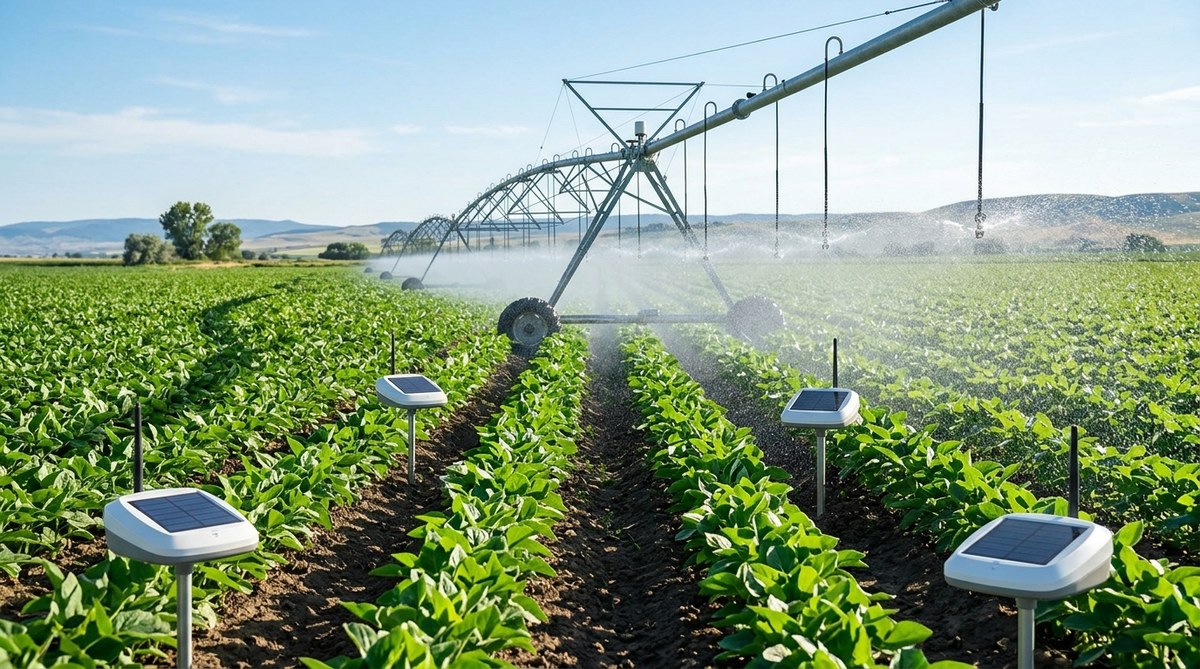
Water is the most precious resource on any farm. You already know that. What you might not realize is how much water gets wasted every season. Traditional irrigation methods apply the same amount of water across an entire field, ignoring variations in soil type, slope, and crop stage. That is no longer necessary. In 2026, smart sensors for irrigation efficiency are changing the game. These small, affordable devices give you real time soil moisture readings, temperature data, and even plant stress levels. They connect to cloud platforms and adjust irrigation schedules automatically. The result? You use less water, spend less on energy, and see better yields. Let us walk through how this technology works and how you can put it to work on your farm.
Smart sensors replace guesswork with precision. By measuring moisture, temperature, and weather data in real time, they let you irrigate only when and where crops need it. Farms that adopt these systems report 20–50 percent water savings, lower pumping costs, and fewer disease outbreaks. The technology pays for itself in one to two seasons.
What Makes a Sensor “Smart”?
A smart sensor does not just collect data. It processes that data and triggers an action. Most smart irrigation systems include three parts: a sensor that sits in the soil or on a weather station, a controller that runs the irrigation valves, and a cloud dashboard you can check from your phone. Some sensors measure volumetric water content. Others track electrical conductivity or leaf wetness. The best systems combine multiple sensor types and pull in local weather forecasts.
The real magic happens when the sensors talk to each other. If the soil is already moist and rain is predicted, the controller skips that irrigation cycle. If a specific zone is drying out faster than the rest, the system increases water delivery to that area only. This level of precision was impossible just a few years ago.
How to Set Up a Smart Sensor System
Setting up smart sensors on your farm does not require a degree in engineering. Follow these five steps to get started.
- Map your field variability. Walk your fields and note low spots, sandy patches, and areas near slopes. Different soil types hold water differently. A soil sensor network should cover the most variable zones.
- Choose the right sensors. Decide between buried soil moisture sensors, aboveground weather stations, or a combination. Capacitance sensors are popular for row crops. Tensiometers work well for orchards and vineyards.
- Install a reliable network. Sensors need to communicate with the controller. Use wireless mesh networks like LoRaWAN or cellular IoT if you have poor Wi Fi. Always test signal strength before burying sensors.
- Set baseline thresholds. Work with your agronomist to set upper and lower moisture limits for each crop stage. For example, corn at tasseling may need a higher moisture threshold than corn at maturity.
- Connect to an automation system. Link the sensors to a valve controller that can turn irrigation on and off based on real time data. Many modern controllers also adjust flow rates to match soil intake rates.
Key Benefits of Smart Sensors for Irrigation
Switching to sensor guided irrigation brings more than just water savings. Here are the main advantages you can expect.
- Lower water bills. Less water pumped means lower electricity or diesel costs. Some operations cut water use by 40 percent or more.
- Healthier crops. Overwatering leads to root rot, fungal diseases, and nutrient leaching. Smart sensors keep moisture in the sweet spot, reducing disease pressure.
- Better nutrient management. When you control water precisely, you can also time fertigation applications. Nutrients stay in the root zone instead of washing away.
- Reduced labor. Automated systems eliminate the need for manual checks and timer adjustments. Your team can focus on other tasks.
- Regulatory compliance. In many western states, water use reporting is mandatory. Smart sensors log every irrigation event, making compliance paperwork easier.
Common Sensor Types and Their Best Uses
Not all sensors are the same. Choosing the right type depends on your crop, soil, and budget. The table below summarizes the most common options.
| Sensor Type | What It Measures | Best For | Typical Cost Per Unit |
|---|---|---|---|
| Soil moisture (capacitance) | Volumetric water content | Row crops, vegetables, turf | $30–$150 |
| Soil moisture (tensiometer) | Soil water tension | Orchards, vineyards, high-value crops | $50–$200 |
| Soil temperature | Root zone temperature | Seedling emergence, frost protection | $20–$80 |
| Electrical conductivity | Salt levels, nutrient availability | Fertigation management, saline soils | $40–$120 |
| Leaf wetness | Duration of leaf moisture | Disease prediction models | $25–$100 |
| Rain gauge | Precipitation amount | Supplemental weather data | $50–$150 |
Mistakes to Avoid With Smart Irrigation
Even the best technology fails if installed or used incorrectly. Watch out for these common pitfalls.
| Mistake | Why It Hurts | How to Fix |
|---|---|---|
| Placing sensors in non representative spots | Data does not reflect the field | Install sensors in multiple zones, especially in variable soil areas |
| Ignoring calibration | Readings drift over time | Recalibrate sensors at least once per season using soil samples |
| Relying only on one sensor type | Single data point misses context | Combine moisture sensors with weather data for better decisions |
| Setting thresholds too loosely | No water savings | Adjust thresholds weekly based on crop growth stage and recent rainfall |
| Forgetting to update firmware | Software bugs or security holes | Set a reminder every 3 months to check for updates |
Expert Advice: “I have seen farms spend thousands on sensors and then never adjust the default settings. The sensor is only as good as the rules you set. Spend time dialing in your moisture thresholds for each crop and each soil type. That is where the real savings come from.” – Tom Reed, precision ag specialist, Corn Belt Ag Solutions
Integrating Sensors With Other Digital Tools
Smart sensors are most powerful when they feed into a larger farm management platform. For example, you can combine real time soil data with weather forecasts and historical yield maps to make irrigation decisions that also consider pest pressure or nutrient needs.
One practical next step is to connect your sensor network to a data analytics system. That way you can track trends over weeks and seasons, not just minutes. Many farms are now using this data to build custom irrigation prescriptions for each field. If you are already using IoT devices to transform modern farming practices, adding soil sensors is a natural extension.
You might also look at implementing digital soil sensors for better crop management outcomes, which covers installation depth and placement strategies in detail.
Practical Steps to Get Started Tomorrow
You do not have to install sensors across all your acres at once. Start small to build confidence.
- Pick one pivot or one block of drip irrigated crops.
- Install three to five sensors in that area, covering the most variable soil types.
- Set up a simple automation rule: irrigate when moisture drops below 30 percent in the top 12 inches.
- Compare water use this season to the same period last year.
- Expand to other fields once you see the payoff.
Many sensor companies offer starter kits with a gateway and a few sensors for under $1,000. That is a small investment compared to the water and energy savings you will see.
The Future of Irrigation in 2026 and Beyond
Sensor technology is getting cheaper, smaller, and more accurate. The next wave includes sensors that measure sap flow in plants, drones that scan canopy temperature, and machine learning models that predict irrigation needs days in advance. Already, some farms use AI powered tools for smarter crop management to adjust irrigation automatically based on crop stress detected from satellite imagery.
The goal is not just to save water. It is to grow more food with fewer inputs. That is good for your bottom line and good for the environment. The farms that adopt smart sensors today will be the ones leading the industry tomorrow.
Your First Step Toward Smarter Irrigation
You have read the benefits. You know the steps. Now it is time to act. Pick a field, buy a sensor kit, and set it up this month. Monitor the data for two weeks. You will be surprised how often the soil is wet enough to skip a watering cycle. Each time you skip, you save money and keep your crops healthier. That is not just smart. It is profitable.
Start small, learn fast, and scale up. Your water bill and your yield monitor will thank you. And if you want to go deeper into how data analytics can amplify your results, check out top strategies for using data analytics to maximize crop yields. The future of farming is already here. You just need the right sensors to see it.
