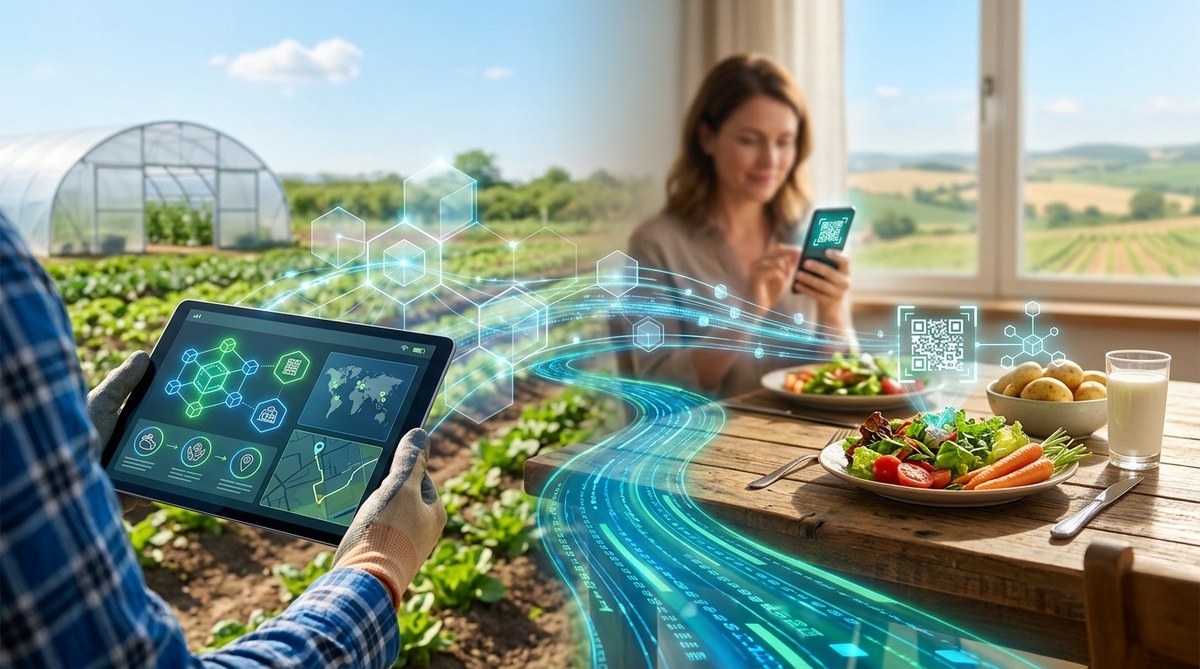
Picture this: a truckload of organic spinach leaves a farm in California, travels to a distribution center in Nevada, then lands on a grocery shelf in Arizona. Somewhere along that journey, a contamination event happens. By the time the source is traced, three days have passed, millions of dollars of product are recalled, and consumer confidence takes a hit. That scenario plays out more often than it should. But blockchain food traceability is changing that.
By creating an unbreakable chain of digital records from seed to sale, blockchain gives every stakeholder a single source of truth. No more siloed spreadsheets. No more finger-pointing. In 2026, the technology has moved from a futuristic concept to a practical tool that supply chain managers, sustainability officers, and agribusiness professionals rely on every day.
Blockchain food traceability is no longer optional. It is the most reliable way to verify sourcing, prevent fraud, and respond to recalls in minutes instead of days. In 2026, retailers and regulators alike demand immutable records. Adopting blockchain now protects your brand, reduces waste, and builds the transparency that today’s consumers expect.
Why Old Traceability Methods Are Failing in 2026
Traditional food traceability relies on paper logs, fragmented databases, and manual data entry. Those systems are slow, error prone, and easy to manipulate. Here is what breaks:
- Data silos: Each party in the supply chain (grower, processor, distributor, retailer) keeps its own records. When a problem arises, reconciling those records takes days.
- No way to verify claims: A label that says “organic” or “fair trade” is only as trustworthy as the paper trail behind it. Without a shared, tamper-proof ledger, fraud is hard to catch.
- Reactive recalls: In a typical recall, companies wait for reports of illness, then start tracing backward. By then, contaminated product has already reached homes.
- Complex reporting for sustainability: Buyers increasingly ask for carbon footprint data and water usage metrics. Pulling that from legacy systems is tedious and often inaccurate.
Blockchain solves each of these problems with a decentralized, cryptographically secure ledger. Every transaction is recorded and visible to authorized participants. No single party can alter the history.
How Blockchain Food Traceability Works: A Step by Step Process
Getting started with blockchain for your supply chain does not require a PhD in computer science. Here is the practical workflow most farms and agribusinesses follow in 2026:
-
Capture data at the source: Use sensors, QR codes, or RFID tags to record key events. For example, a harvester logs the GPS coordinates, time, and batch ID of picked tomatoes directly into the blockchain via a mobile app.
-
Hash and store the record: The data is hashed (a technique that creates a unique fingerprint) and written to the distributed ledger. The record includes a timestamp and a digital signature from the participant.
-
Share permissioned access: Only approved supply chain partners can read or append data. Growers, processors, distributors, retailers, and auditors each see the records relevant to them.
-
Automate verification with smart contracts: Smart contracts automatically check conditions. For instance, a contract can verify that a shipment stayed within the required temperature range throughout transit. If it did not, the contract flags the batch.
-
Enable instant traceback: When a problem is reported, a manager scans a QR code on a product package. Within seconds, the blockchain returns the full journey: farm, harvest date, processing plant, shipping logs, and storage conditions.
This system works for everything from a single head of lettuce to a container of frozen seafood. The same principles apply.
“The biggest shift we have seen in 2026 is that retailers are now requiring blockchain traceability as a condition of doing business. If your farm cannot prove its sourcing data lives on an immutable ledger, you may not get shelf space.” – Javier Reyes, supply chain director for a major Midwest grocery cooperative.
Blockchain vs. Traditional Traceability: A Comparison
To see the difference clearly, look at how each approach handles the same tasks.
| Feature | Traditional Traceability | Blockchain Traceability |
|---|---|---|
| Data storage | Paper logs or siloed databases | Shared, distributed ledger |
| Tamper resistance | Low (records can be altered or lost) | High (cryptographic proof of history) |
| Recall speed | Hours to days | Minutes |
| Cost of implementation | Low upfront, high error cost later | Moderate upfront, lower risk cost |
| Audit readiness | Manual effort required | Automatic, always on |
| Consumer transparency | Limited (word of trust in label) | Full (scan QR code to see journey) |
| Fraud prevention | Reactive | Proactive and verifiable |
The table makes one thing clear: blockchain is not about replacing people. It is about creating a reliable, shared memory for the entire supply chain.
Practical Steps to Adopt Blockchain on Your Farm or Supply Chain
Making the switch does not have to be overwhelming. Most agribusinesses start with a pilot project. Here are five steps that work in 2026:
- Pick a high value crop or product line: Start with something that has a clear story to tell, like organic berries or pasture raised eggs. The ROI from transparency is easier to measure.
- Choose a blockchain platform built for food supply chains: Look for platforms that integrate with your existing farm management software and support IoT devices. Many offer plug and play modules for small and mid sized farms.
- Train your team on data entry standards: Blockchain is only as good as the data it receives. Ensure workers understand how to log harvest dates, lot numbers, and handling conditions correctly.
- Connect with your buyers early: When you tell a retailer you are adopting blockchain, they will likely support it. They may even offer incentives or technical help. Collaboration reduces friction.
- Test a full trace before going live: Run a mock recall using your pilot product. See how long it takes to trace a batch from store shelf back to your field. Aim for under 30 seconds.
For additional context on how to integrate technology with your existing operations, read about harnessing IoT devices to transform modern farming practices. That article covers the sensors and connectivity that feed data into a blockchain ledger.
Overcoming Common Doubts About Blockchain in Agriculture
Many supply chain professionals still wonder if blockchain is worth the effort. Here are the three most common concerns I hear, along with the reality in 2026.
Worry 1: “Blockchain is too expensive for my farm.” The truth is that monthly costs for a basic blockchain service have dropped below $200 for small operations. When you factor in prevented recalls, reduced fraud, and premium pricing from transparency conscious buyers, the investment pays for itself.
Worry 2: “My supply chain partners won’t join.” Major retailers like Walmart and Costco have already mandated blockchain for certain products. Smaller retailers are following. The network effect works: once a few key partners join, others have to get on board to stay competitive.
Worry 3: “It is too complicated to set up.” Modern blockchain platforms are designed for users with no coding background. Setup wizards, integrations with tools like QuickBooks and FarmLogs, and responsive support teams make adoption smoother than ever.
If you are curious about the broader role of data in farming, check out our guide on top strategies for using data analytics to maximize crop yields. Blockchain and analytics together form a powerful combination for modern agribusiness.
Building a Trustworthy Food System, One Block at a Time
In 2026, the question is no longer whether blockchain food traceability will become standard. It is how soon your operation will adopt it. The benefits are measurable: faster recalls, stronger consumer trust, verified sustainability claims, and a competitive edge in a market that demands transparency.
Start small. Pick one crop, one buyer, and one blockchain platform. Run a pilot. Learn from the results. Then expand. The journey from farm to table is long, but with blockchain, every step can be recorded, verified, and trusted.
Your customers are paying attention. Your retailers are demanding it. And your bottom line will thank you for making the switch today.
