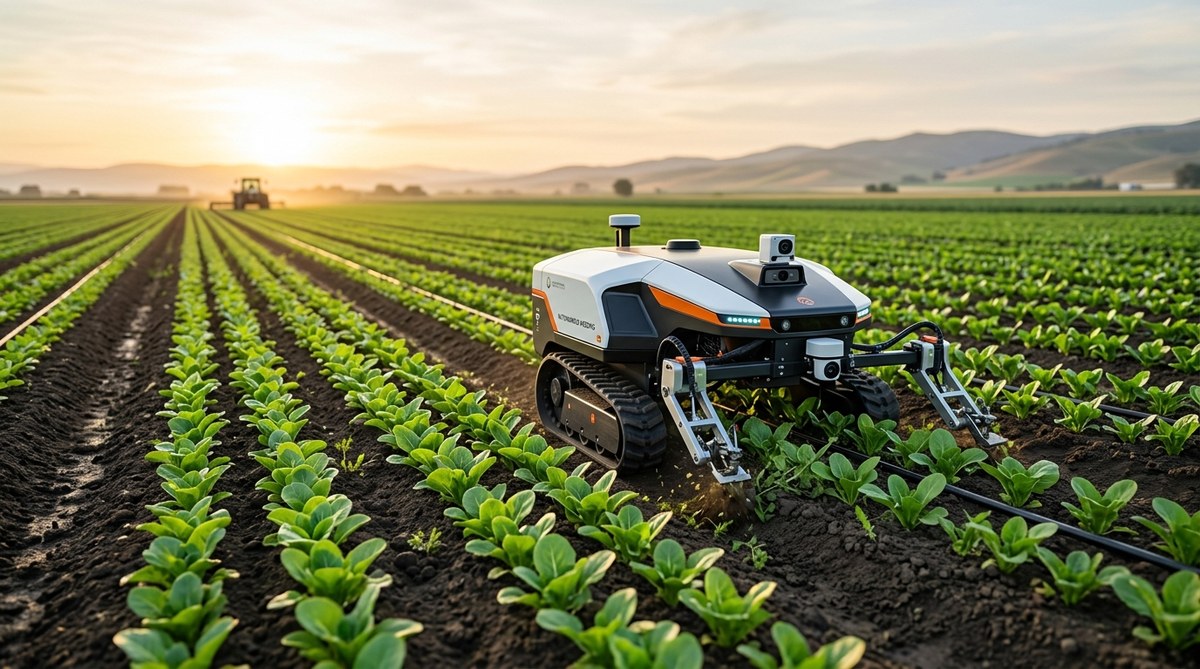
Spraying herbicides has been the standard for decades. But across the Corn Belt and the vegetable fields of California, a new question is gaining traction: can a machine with cameras and artificial intelligence do the job without the chemicals? The short answer is yes, for many crops and conditions. The longer answer depends on your farm size, weed pressure, and budget.
Automated weeding robots already reduce herbicide use by 70 to 95 percent in specialty crops like lettuce and onions. For row crops such as corn and soybeans, the technology is advancing fast but still works best as a complement to low-rate herbicides. In 2026, the economics favor robots on farms over 500 acres if you factor in labor savings and chemical cost avoidance. Early adopters report positive ROI within two to three seasons.
How Automated Weeding Robots Spot and Remove Weeds
These machines rely on computer vision and machine learning models trained on thousands of weed and crop images. A camera or multispectral sensor scans the ground as the robot moves through the field. Within milliseconds, the onboard AI classifies each plant as crop or weed. Then a mechanical arm, a jet of pressurized water, a laser, or a small blade removes the weed.
The precision is remarkable. Most systems can distinguish between a pigweed seedling and a young soybean plant even when they are only an inch apart. In a 2025 field trial in Iowa, a Blue River Technology robot identified 98 percent of waterhemp while damaging fewer than 2 percent of the crop plants. That level of accuracy is hard to achieve with broadcast spraying.
What Does It Cost to Run a Weeding Robot in 2026?
Pricing varies widely based on the robot model and the service model you choose. Some companies sell the hardware outright; others offer a Robotics-as-a-Service subscription. Here is a snapshot of typical costs:
| Robot Type | Purchase Price Range | Annual Subscription/Service | Acres per Hour | Fuel/Energy Cost per acre |
|---|---|---|---|---|
| Small electric (e.g., Aigen) | $55,000 – $75,000 | N/A | 1 – 2 | $0.15 (electricity) |
| Mid-size mechanical (e.g., Naio Technologies) | $80,000 – $140,000 | $12,000 – $18,000 | 2 – 4 | $0.50 (diesel) |
| Large laser weeder (e.g., Carbon Robotics) | $900,000+ | $30,000 – $50,000 | 4 – 8 | $2.00 (fuel + laser maintenance) |
The large laser weeder sounds expensive, but in high-value crops like organic spinach or specialty lettuce, it can pay for itself in two seasons by eliminating hand weeding labor.
Are They a Full Replacement for Herbicides?
Not yet across the board, but the gap is shrinking. Let us break it down by crop type.
Row Crops: Corn, Soybeans, Cotton
In these systems, herbicides remain the backbone because the scale is enormous and weed pressure is high. However, robots are increasingly used to spot-treat herbicide-resistant weeds like Palmer amaranth and waterhemp. A 2026 study from the University of Illinois found that using a robot to target only resistant weeds cut total herbicide volume by 42 percent while maintaining yield. That is a win for both the budget and the environment.
Specialty Crops: Lettuce, Onions, Tomatoes, Strawberries
Here, robots can replace nearly all pre-emergence and post-emergence herbicides. The small fields, high crop value, and strict pesticide restrictions make them ideal. In California’s Salinas Valley, a fleet of 30 small weeding robots from FarmWise now manages over 3,000 acres of lettuce with zero chemical weed control. The robots thin and weed simultaneously.
Orchards and Vineyards
Robots that drive between rows and use lasers or compressed air to remove weeds from the tree line are gaining ground. They eliminate the need for residual herbicides under the canopy, which reduces runoff and protects beneficial soil microbes. Some vintners in Napa Valley report a 60 percent reduction in glyphosate use after introducing laser weeders.
3 Steps to Evaluate if Robots Fit Your Farm
If you are curious about adopting automated weeding robots, follow this practical process.
-
Audit your current weed control costs. Add up your herbicide bills, application labor, fuel for sprayers, and the cost of managing herbicide resistance. This gives you a baseline for comparison.
-
Identify your problem weeds and your most expensive fields. Robots pay back fastest where hand weeding is needed or where resistant weeds force expensive alternative chemistries. Make a list of your top three problem fields.
-
Run a pilot on 10 to 20 acres. Lease a unit or use a service provider for one season. Measure weed counts, crop injury, and yield. Compare those numbers against your conventional approach.
“The farmers who succeed with robotics are the ones who treat it like a seed trial. They test, measure, and adjust before scaling,” says Dr. Helen Carter, precision ag specialist at the University of California Cooperative Extension.
Common Mistakes to Avoid When Switching to Robots
Not every field is robot-ready. Here are pitfalls observed in early 2026 adopters:
- Using robots on fields with huge rocks or heavy residue. Most mechanical robots cannot handle large stones or thick corn stalks. Use a field conditioner first.
- Skipping the software updates. Robot AI models need regular training on local weed populations. Subscribe to monthly updates from the manufacturer.
- Expecting 100 percent weed kill. No robot is perfect. Plan for a follow up pass or a low-rate herbicide application for escapes.
- Ignoring soil moisture. Many robots struggle in wet, sticky soil. Check the manufacturer’s minimum soil moisture rating before running.
The Data Advantage: How Robots Make You a Better Farmer
One often overlooked benefit is the data these machines collect. Every robot logs weed species, location, and density. That information can feed into your decision making for the next season. For example, if a robot shows that foxtail is concentrated in one field corner, you can target that area with a pre-emergent herbicide next spring instead of broadcasting it across the whole farm. This is where machine learning and precision ag really shine.
If you already use soil sensors or drone imagery, integrating robot data creates a powerful feedback loop. Check out our guide on how to use computer vision for real-time crop monitoring in 2026 to see how these tools complement each other.
What to Look for in a Robot Vendor
Not all robots are built the same. Before signing a contract, ask these questions:
- Does the robot work in your soil type and field geometry?
- What is the average throughput in your crop at your row spacing?
- How often does the company update the weed recognition model?
- What is the warranty and service turnaround time?
- Can the robot be upgraded with new sensors or attachments?
A trustworthy vendor will give you names of three current customers you can call. Do not skip that step.
The Bottom Line for 2026 and Beyond
Automated weeding robots are no longer a future concept. They are working today on thousands of acres across the United States. For specialty crop growers, they can replace herbicides almost completely. For row crop farmers, they are a powerful tool to reduce chemical use and beat resistance. The key is to start small, measure everything, and treat the robot as part of an integrated weed management system rather than a magic bullet.
If you want to learn how IoT devices can help you monitor your robot fleet and field conditions, read our piece on harnessing IoT devices to transform modern farming practices. And if you are still on the fence about precision ag, our comprehensive analysis of is precision agriculture worth the investment in 2026 might give you the numbers you need.
Your Next Step Toward Smarter Weed Control
You do not have to overhaul your entire operation overnight. Pick one field. Find a local dealer who offers a trial program. Run the numbers. The technology is here, it works, and it keeps getting better. Your soil, your wallet, and your local water table will thank you for giving it a shot.
