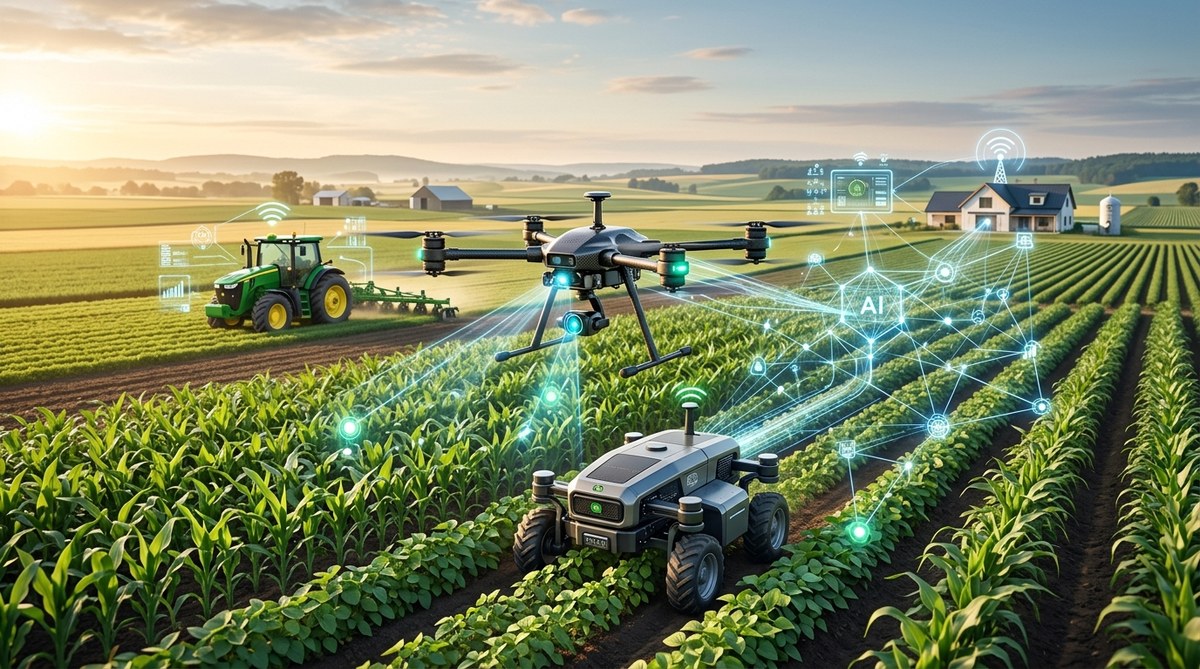
Artificial intelligence is reshaping the future of farming in powerful ways. From predicting crop yields to automating equipment, AI tools are helping farmers work smarter and more sustainably. As agricultural professionals seek better ways to meet growing food demands, understanding how AI can support their efforts becomes essential. This guide dives into the practical applications of artificial intelligence in agriculture and how it can improve your farm operations today.
Artificial intelligence in agriculture offers practical solutions to optimize resources, increase crop yields, and promote sustainability. By adopting AI-driven tools, farms can become more efficient and resilient in a changing climate.
How artificial intelligence is changing the face of modern farming
Artificial intelligence has become a game-changer in agriculture. It leverages data from sensors, satellites, drones, and machinery to provide insights that were previously impossible to access. This technological leap allows farmers to make more informed decisions, reduce waste, and increase productivity.
AI can analyze weather patterns, soil health, crop health, and market trends. It helps in forecasting harvest times, detecting pests early, and optimizing irrigation schedules. Such capabilities lead to better resource management and healthier crops.
Practical ways AI can enhance farming practices
Implementing AI in agriculture involves a few key steps. Here are practical processes to help you integrate AI tools into your farm:
-
Assess your farm’s needs and goals
Identify specific challenges or opportunities where AI can add value. For example, if pest infestations are frequent, focus on AI-based pest detection tools. If water usage is high, consider AI-driven irrigation management. -
Collect and organize data
Use sensors, drones, or satellite imagery to gather detailed information about your land, crops, and weather. Accurate data forms the foundation for effective AI analysis. -
Choose the right AI solutions
Select tools tailored to your needs. These can include predictive analytics platforms, autonomous machinery, or crop monitoring apps. Many providers offer customizable options suited for different farm sizes and types. -
Train yourself and your team
Understand how to interpret AI insights and operate new equipment. Investing time in training ensures you can make the most of these advanced tools. -
Monitor results and adapt
Track how AI-driven decisions impact your farm. Use feedback to refine processes and expand successful strategies.
Practical applications of artificial intelligence in agriculture
Here are some specific ways AI is making a difference on farms:
-
Precision farming: AI algorithms analyze soil and crop data to optimize planting, fertilization, and irrigation. This reduces resource waste and increases yields.
-
Pest and disease detection: Machine learning models identify early signs of pest infestations or crop diseases from images captured by drones or smartphones, enabling prompt action.
-
Yield prediction: AI models forecast harvest sizes based on weather, soil conditions, and crop health, helping farmers plan better and avoid shortages.
-
Autonomous machinery: Self-driving tractors and harvesters equipped with AI can operate efficiently, reducing labor costs and increasing operational hours.
-
Supply chain optimization: AI tools analyze market trends and weather forecasts to improve logistics, reducing spoilage and ensuring products reach markets fresh.
Common pitfalls and how to avoid them
While AI offers many benefits, there are mistakes to watch out for:
| Technique | Mistake | How to avoid |
|---|---|---|
| Data collection | Relying on incomplete data | Use diverse sources and verify accuracy regularly |
| Tool selection | Choosing overly complex solutions | Select user-friendly options that match your farm size and needs |
| Training | Underestimating training needs | Allocate time for staff to learn new systems thoroughly |
| Implementation | Ignoring local context | Adapt AI strategies to your specific climate, soil, and crop types |
“AI is not a magic wand. It is a tool that, when used properly, can transform data into actionable insights. Start small, learn, and expand your AI applications gradually,” advises Dr. Lisa Nguyen, an expert in agri-tech innovation.
Future trends shaping AI-driven agriculture
Looking ahead, advancements in artificial intelligence will continue to revolutionize farming in several ways:
- Greater integration with Internet of Things (IoT) devices for real-time monitoring
- Enhanced predictive models that factor in climate change impacts
- Development of more affordable AI solutions for small-scale farmers
- Increased use of robotics and autonomous systems for planting, maintenance, and harvesting
Staying up-to-date with these trends can position your farm at the forefront of sustainable and efficient agriculture.
How to start integrating AI into your farm today
Starting the journey toward AI-driven farming doesn’t have to be daunting. Consider the following:
- Begin with a small pilot project, such as implementing AI-based pest detection on a single crop type.
- Partner with local universities or agri-tech companies for expertise and support.
- Attend workshops or webinars focusing on AI applications in agriculture.
- Keep an open mind and be willing to adapt based on results and new information.
Remember, the goal is to make your farm more resilient, productive, and sustainable through data-driven decisions.
Embracing the future of farming with artificial intelligence
Artificial intelligence offers a promising path to meet the challenges faced by today’s farmers. It enables smarter resource use, better crop management, and more sustainable practices. The key lies in understanding your farm’s unique needs and gradually adopting AI tools that fit your operations.
By taking these practical steps, you can harness AI’s potential to transform your farm into a more efficient, profitable, and environmentally friendly enterprise. Embrace this technology as a partner in your farming journey, and watch your operations thrive in a changing world.
