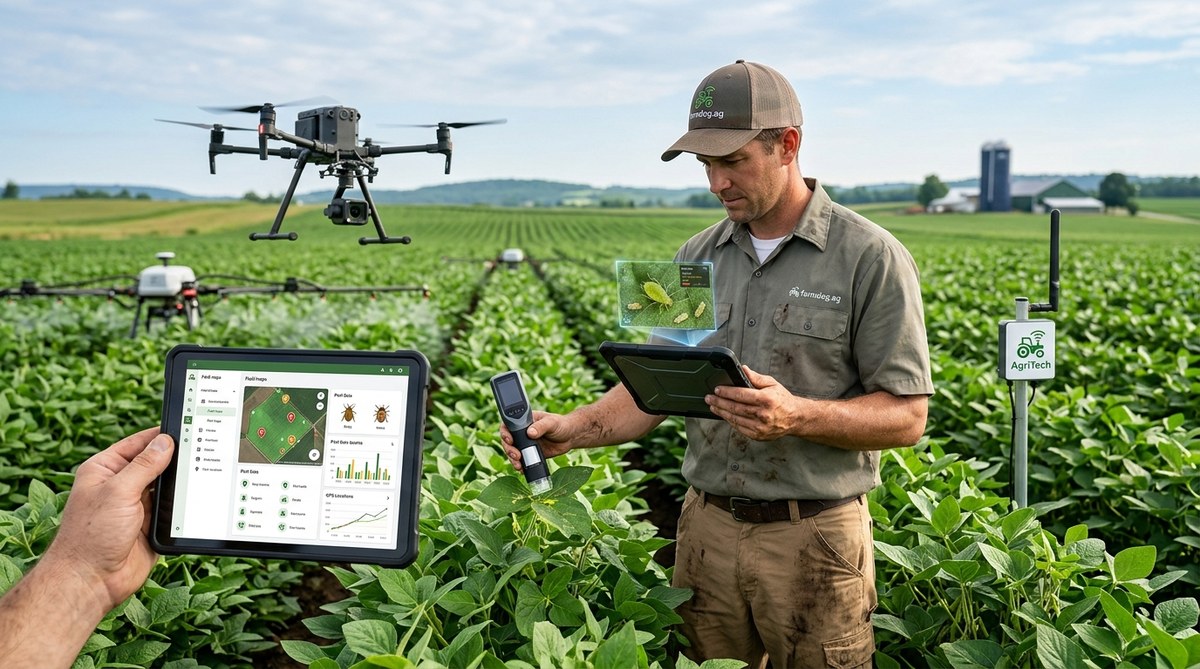
Farmers and agricultural professionals face ongoing challenges with pests that threaten crop yields and farm profitability. Traditional scouting methods can be time-consuming and often miss early signs of infestations. Fortunately, a new wave of digital tools is transforming how pests are identified and managed. These innovations help farmers catch problems early, reduce pesticide use, and improve overall crop health. By integrating technology into daily farm routines, growers can make smarter decisions and boost productivity.
Digital tools for pest identification and control provide real-time insights that help farmers detect issues early, reduce chemical use, and optimize crop health through data-driven decisions and automation.
Why digital tools are changing pest management in agriculture
Using digital tools in pest management offers a more precise, efficient, and sustainable approach. Instead of relying solely on manual scouting, farmers can now leverage technology to monitor their fields continuously. These tools use artificial intelligence, satellite imagery, and IoT sensors to identify pests and diseases at their earliest stages. This early detection helps prevent widespread infestations, saving crops and reducing input costs.
Types of digital tools available for pest identification and control
There is a wide range of digital solutions tailored to different farm sizes and needs. Here are some of the most popular categories:
- Mobile apps for quick pest and disease diagnosis
- AI-powered platforms that analyze images and field data
- IoT sensors and drones for real-time monitoring
- Satellite imaging for large-scale crop health analysis
- Decision support systems that recommend control actions
Each type offers unique advantages, and many farmers combine multiple tools for optimal results.
Practical steps for integrating digital pest control tools on your farm
Implementing these tools effectively requires a clear plan. Here’s a straightforward process to get started:
- Identify your needs and define your pest management goals.
- Choose the right digital solutions that match your farm size and crop types.
- Train yourself and your team on how to use these tools efficiently.
- Start small with pilot projects to test their effectiveness.
- Regularly analyze data and adjust your pest management strategies accordingly.
Tips for successful adoption
- Keep your devices updated with the latest software versions.
- Use high-quality images when submitting pest samples via apps.
- Combine digital insights with traditional scouting for best results.
- Share findings with local agritech communities to learn best practices.
Popular digital tools for pest identification and control
Several innovative solutions stand out for their effectiveness and user-friendliness. Here are some top options:
1. Plantix
Plantix is a mobile app that allows farmers to take pictures of affected plants and get instant diagnoses. It uses AI to identify pests, diseases, and nutrient deficiencies. The app also provides tailored treatment recommendations and connects users to local agronomists.
2. CropX
CropX integrates soil sensors and cloud analytics to monitor soil health and pest risks simultaneously. It helps farmers pinpoint problem areas and optimize irrigation and pesticide application based on real-time data.
3. Pessl Instruments
Pessl offers IoT-based pest monitoring systems that deploy sensors and pheromone traps. Data collected helps farmers anticipate pest outbreaks and take preventive measures before infestations escalate.
4. Satshot
Satshot uses satellite imagery to assess crop health across large fields. It detects stress signals that may indicate pest activity early on, allowing targeted interventions.
5. AgriSight
AgriSight combines drone imagery and machine learning to identify pest hotspots. It provides detailed maps that guide precise pesticide application, reducing waste and environmental impact.
How to pick the right digital tool for your farm
Choosing the ideal solution depends on your specific farm conditions. Consider these factors:
- Farm size and crop types
- Budget constraints
- Technical expertise
- Compatibility with existing equipment
- Data privacy and security
Also, look for tools that offer customer support and training resources. Reading reviews and asking fellow farmers about their experiences can help clarify your options.
Common pitfalls and how to avoid them
While digital tools can significantly improve pest management, some mistakes can hinder their effectiveness:
| Technique | Common Mistake | How to Avoid |
|---|---|---|
| Image submission | Taking blurry or poor-quality photos | Use high-resolution cameras and good lighting |
| Overreliance | Relying solely on digital data without field verification | Combine digital insights with manual scouting |
| Ignoring updates | Not updating software or firmware | Regularly check for updates and maintain devices |
| Data overload | Analyzing too much information without action | Focus on actionable insights and prioritize problems |
Expert advice on making technology work for your farm
“Digital tools are only as good as the way you use them. Regularly review your data and adapt your pest management practices accordingly. Combining traditional scouting with technology delivers the best results.” — Dr. Emily Hart, Agritech Specialist
Embracing a smarter approach to pest control
Integrating digital tools into your pest management routine can make a real difference. From early detection to targeted interventions, these solutions save time, reduce costs, and promote sustainable farming. Start by selecting the technology that fits your operation, and gradually build your proficiency. As you incorporate data-driven insights, you’ll notice healthier crops and improved yields.
By staying open to innovation and continuously learning, you can turn technology into your strongest ally in protecting your farm against pests. Practical implementation today sets the stage for a more resilient and productive future.
