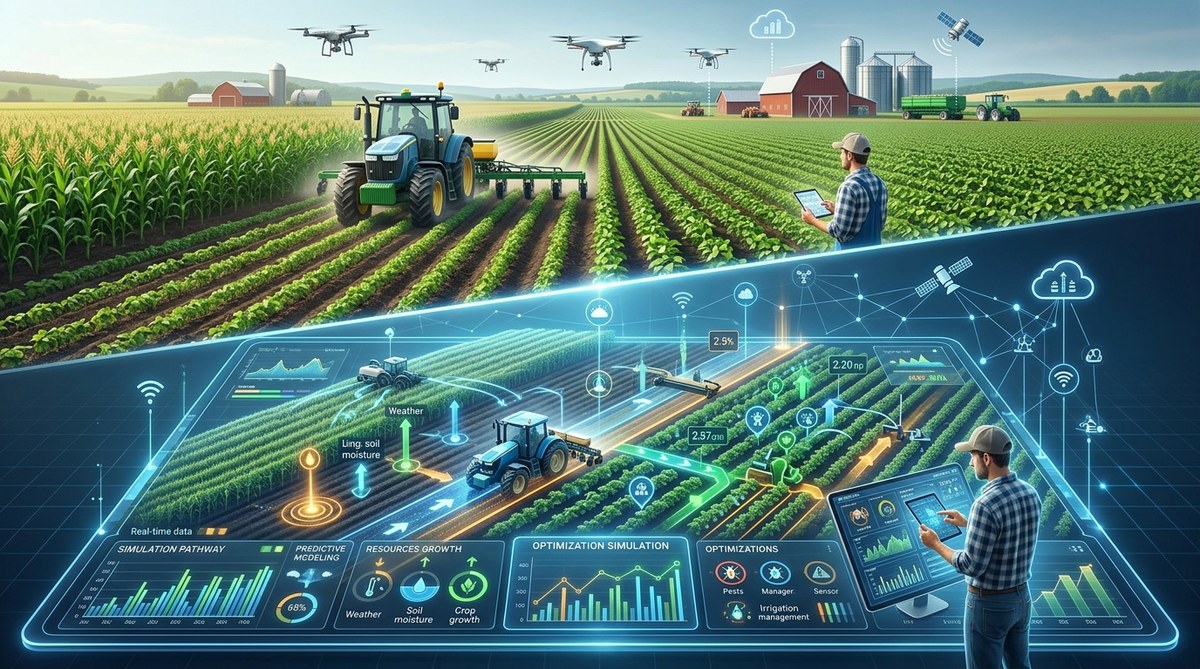
Every farm manager knows the feeling: you spot a problem in the field, but you only have one chance to fix it before the season slips away. What if you could test every decision before it touches the soil? That is exactly what a digital twin in agriculture makes possible.
A digital twin is a living virtual copy of your farm. It mirrors your fields, equipment, soil, weather, and crop data in real time. You can run scenarios, spot bottlenecks, and compare outcomes without risking a single acre. Instead of guessing, you simulate. Instead of reacting, you plan. For mid to large operations, this is the difference between hoping for a good season and engineering one.
A digital twin in agriculture is a virtual replica of your farm that mirrors soil, weather, equipment, and crop data in real time. By running simulations, you can test planting schedules, irrigation plans, and input rates without touching a single acre. Start small, validate the model, then scale. The payoff is lower input costs, higher yields, and smarter decisions grounded in data.
## What Is a Digital Twin in Agriculture?
A digital twin in agriculture is a virtual mirror of your physical farm. It combines live data from sensors, drones, satellites, and equipment with models that simulate how your fields behave. Think of it as a living, breathing copy of your operation that updates in real time.
You can test changes in the twin before you make them in the field. Adjust irrigation. Change planting density. Move harvest schedules. The twin shows you the likely outcome before you commit a single acre.
This is not a static map or a fancy dashboard. It is a dynamic model that learns from your farm’s data. It connects soil conditions, weather patterns, crop growth stages, equipment performance, and even market prices. When one variable changes, the model recalculates the ripple effects across your entire operation.
The result? You make decisions based on simulated outcomes, not guesswork. That is the core promise of a digital twin in agriculture.
A digital twin in agriculture is a virtual replica of your farm that mirrors soil, weather, equipment, and crop data in real time. It lets you test scenarios, spot inefficiencies, and predict outcomes before touching a single acre. The result: lower input costs, better yields, and smarter decisions backed by data.
## What Is a Digital Twin in Agriculture?
A digital twin is a virtual copy of a physical system. In farming, that system can be a field, a greenhouse, an irrigation network, or an entire operation. Sensors, drones, and machinery feed live data into the model. Software then builds a real-time digital reflection of what is happening on your land.
Think of it as a living map of your farm. It updates as conditions change. Soil moisture, crop health, equipment status, weather, and even market prices can flow into the model. You can then run simulations against that model. Want to see what happens if you cut nitrogen rates by 15 percent? You can test it in the digital world before touching a single acre.
This is why the [digital twin in agriculture](https://farmdog.ag/how-to-use-digital-twins-to-simulate-and-optimize-your-entire-farm-operation) is becoming a central piece of modern farm management. It is not a concept for research labs anymore. It is a working tool for growers who want to make data-backed decisions without risking a season.
—
A digital twin in agriculture is a living virtual replica of your farm that mirrors soil, weather, equipment, and crop conditions in real time. It lets you test scenarios, predict outcomes, and optimize inputs without touching a single acre. Start small, connect IoT sensors, validate the model against field data, then scale gradually. Done right, a digital twin cuts waste, improves yields, and turns farming decisions into data-backed moves.
## What Is a Digital Twin in Agriculture?
A digital twin is a virtual mirror of your physical farm. It uses live data from sensors, drones, equipment, and weather services to create a digital model that updates as conditions change. In agriculture, this means your fields, soil, irrigation systems, and even machinery exist as a digital replica you can test and analyze in real time.
Think of it as a flight simulator for your farm. Pilots train in simulators before touching a real plane. They test emergency scenarios, practice landings, and refine decisions without risk. A digital twin in agriculture works the same way. You run scenarios, spot problems, and optimize operations before you ever move a piece of equipment or spend a dollar on inputs.
The concept has matured fast. What started as a manufacturing tool is now a practical way to manage large farming operations. With the rise of IoT sensors, drones, and AI models, you can now build a living digital copy of your fields, equipment, and workflows. That copy updates with real-time data, so your decisions reflect what is actually happening on the ground, not just what happened last season.
What Is a Digital Twin in Agriculture?
A digital twin is a virtual replica of a physical system. In farming, that system could be a single field, an irrigation network, a greenhouse, or your entire operation. The twin mirrors what is happening in real time using data from sensors, drones, satellites, and machinery telemetry.
The real power comes from simulation. You can run scenarios, test changes, and predict outcomes without touching a single plant. Want to see what happens if you cut nitrogen by 15 percent? Run it on the twin first. Curious how a new irrigation schedule affects yield? The twin shows you before you commit.
This is not a static 3D model. It is a living digital replica that updates with live data. When soil moisture changes in the field, the twin reflects it. When weather patterns shift, the model adjusts. That continuous feedback loop is what separates a digital twin from a simple dashboard.
—
## What Is a Digital Twin in Agriculture?
A digital twin is a virtual copy of a physical farm system. It mirrors your fields, equipment, irrigation lines, and even weather exposure. Sensors feed it real time data. Machine learning helps it spot patterns. You can run simulations, test changes, and predict outcomes without touching a single plant.
Think of it as a flight simulator for your farm. Pilots train in simulators before touching a real plane. They test emergency procedures, fuel scenarios, and weather risks without leaving the ground. A digital twin does the same for your operation. It lets you test a new irrigation schedule, a different planting density, or a new fertilizer plan before you commit resources in the real world.
The value goes beyond simple visualization. A digital twin in agriculture connects live data from your fields, equipment, and weather stations into a living model. That model keeps updating as conditions change. You can run simulations, compare scenarios, and make decisions with far more confidence.
## What Is a Digital Twin in Agriculture?
A digital twin is a virtual replica of a physical system. In farming, that system can be a single field, a greenhouse, an irrigation network, or your entire operation. The twin uses real time data from sensors, drones, satellites, and machinery to mirror what is happening on the ground.
The difference between a static map and a digital twin is the feedback loop. A map shows you where things are. A digital twin shows you how things are changing, why they are changing, and what happens if you change an input. It is a living model that updates as your farm updates.
For example, you can model soil moisture across a 2,000 acre corn operation. Feed in rainfall data, irrigation schedules, and evapotranspiration rates. The twin then runs scenarios. What happens if you cut irrigation by 15 percent on the north field? What if you shift to variable rate application on sandy patches? You get answers without touching a single valve.
This is the power of a digital twin in agriculture. It lets you test decisions in a virtual replica before you commit real seed, fuel, or fertilizer.
## What Is a Digital Twin in Agriculture?
A digital twin is a virtual copy of a physical system. In farming, that system can be a field, a greenhouse, an irrigation network, or an entire operation. The twin updates continuously with data from sensors, drones, satellites, and equipment telemetry. It mirrors what is happening on the ground in real time.
But it does more than mirror. A digital twin runs simulations. You can ask it what happens if you change planting density, shift irrigation schedules, or alter nitrogen rates. It uses machine learning and historical data to predict outcomes. This is why many experts call it a living model of your farm.
For a [digital twin in agriculture](https://farmdog.ag/how-to-use-digital-twins-to-simulate-and-optimize-your-entire-farm-operation), the value is simple. You test ideas in a virtual world before you commit seeds, fuel, or fertilizer in the real one. No risk, no wasted inputs, no sleepless nights wondering if a change will pay off.
A digital twin in agriculture is a living virtual copy of your farm that syncs with real time data from sensors, equipment, and weather feeds. It lets you test decisions before you commit. You can simulate irrigation changes, variable rate applications, equipment schedules, and more. The payoff is lower input costs, better yields, and less risk when you scale new practices.
## What Is a Digital Twin in Agriculture?
A digital twin in agriculture is a virtual replica of your physical farm. It mirrors your fields, soil, crops, equipment, and even weather conditions in real time. Sensors, drones, and machinery feed data into the model. The model then updates continuously, so you see what is happening across the operation as it happens.
Think of it as a living, breathing simulation of your farm. You can run scenarios on it without touching a single acre. Change a seeding rate, adjust an irrigation schedule, or test a new hybrid, and the twin shows you the likely outcome before you commit.
This is not a static 3D map. It is a dynamic system that learns and updates. It combines Internet of Things (IoT) data, weather feeds, soil information, equipment telemetry, and machine learning. The result is a virtual copy of your operation that behaves like the real thing.
For mid to large scale farms, this matters. You can test decisions in minutes that used to take a full season to validate. And you can do it without risking a single dollar of input cost.
—
## What Is a Digital Twin in Agriculture?
A digital twin in agriculture is a virtual replica of a physical farm. It mirrors your fields, crops, equipment, soil, irrigation lines, and even weather exposure in real time.
Sensors in the field feed data into the model. Drones map crop health. Soil probes track moisture. Equipment telemetry reports machine performance. All of this flows into a simulation that updates continuously.
The result is a living digital copy of your operation. You can run scenarios on it, predict outcomes, and test changes before touching real equipment or seed. Think of it as a flight simulator for your farm, but one that uses live data instead of guesswork.
This guide walks through how digital twins work, how to build one step by step, and where they deliver the biggest returns in 2026.
A digital twin in agriculture is a live virtual copy of your farm that mirrors soil, weather, equipment, and crops in real time. It lets you test decisions before touching a single acre. Start small with one field or one machine, connect your IoT sensors, validate the model, then scale. The payoff is lower input costs, higher yields, and fewer risky surprises.
## What Is a Digital Twin in Agriculture?
A digital twin is a virtual model of a physical system that updates continuously with real world data. In agriculture, that system can be a single field, an irrigation network, a fleet of tractors, or your entire operation. Sensors, drones, satellites, and equipment telemetry feed live data into the model. The model then mirrors what is happening on the ground and can run simulations to predict what happens next.
Think of it as a living copy of your farm. It changes when your farm changes. Rain falls, the twin updates. A pivot stalls, the twin shows it. You can test a new planting date, change nitrogen rates, or reroute harvest equipment without touching a single machine.
This is not a static map or a fancy dashboard. A digital twin in agriculture is a two way connection between the physical field and its virtual model. Data flows in from sensors and equipment, and decisions flow back out to the real world.
For farm owners and agronomists, this means you can simulate scenarios before they cost you money. You can stress test inputs, weather shifts, and equipment schedules without risking a single acre. That is the core value of a digital twin in agriculture: it turns your farm into a living laboratory where every decision can be rehearsed before it becomes real.
A digital twin in agriculture is a live virtual replica of your farm that syncs with real-time field data from IoT sensors, drones, and equipment. It lets you simulate weather events, test input changes, and optimize workflows without risking a single acre. Start small with one field, validate the model, then scale. The payoff is lower input costs, higher yields, and smarter decisions backed by data rather than guesswork.
## What Is a Digital Twin in Agriculture?
A digital twin is a virtual mirror of a physical system. In farming, it combines real-time data from your fields, equipment, and environment into a living digital model. That model updates continuously as conditions change. You can run simulations, test scenarios, and predict outcomes before touching a single plant.
Think of it as a flight simulator for your farm. Pilots train in virtual cockpits before flying real planes. You can do the same with your operation. Test a new irrigation schedule, adjust nitrogen rates, or shift planting windows. See the results in minutes instead of months.
The concept started in manufacturing and aerospace. Now it has moved into agriculture with powerful results. A digital twin is not a static map or a simple dashboard. It is a dynamic, data driven mirror of your fields, equipment, and weather exposure. It updates continuously using real time data from sensors, drones, and machinery. Then it uses simulation and AI to predict what happens next.
For farm owners and agronomists, this is the closest thing to a time machine. You can test decisions without touching a single acre. You can compare scenarios, spot bottlenecks, and fine tune inputs before you commit.
—
## What Is a Digital Twin in Agriculture?
A digital twin in agriculture is a virtual replica of your physical farm. It combines live data streams, historical records, and simulation models to mirror what is happening in your fields right now. It also predicts what could happen under different conditions.
Think of it as a living, breathing map of your operation. It updates with data from soil sensors, weather stations, drones, equipment telematics, and satellite imagery. When conditions change, the twin changes too. You can then run scenarios, like changing irrigation schedules or nitrogen rates, and see the impact before you touch a single machine.
The goal is simple. Make better decisions with less guesswork. Instead of testing an idea on 100 acres of real corn, you test it on a virtual version of those acres first.
—
## What Is a Digital Twin in Agriculture?
A digital twin is a virtual replica of a physical farm. It mirrors your fields, crops, equipment, and even the weather around them. The twin updates continuously with real-time data from sensors, drones, satellites, and machinery. It uses that data to simulate what is happening now and predict what could happen next.
In agriculture, this means your farm gets a living digital copy. You can watch soil moisture change, track crop stress, and monitor equipment health from one dashboard. Then you can run scenarios. What if you irrigated two days earlier? What if you planted a different hybrid? What if you shifted your nitrogen application by 15 percent? The digital twin answers these questions without touching a single acre.
The result is a smarter, more resilient operation. You test before you act. You optimize before you invest. And you catch problems before they cost you a season.
—
## What Is a Digital Twin in Agriculture?
A digital twin in agriculture is a virtual replica of your physical farm. It mirrors your fields, crops, soil, equipment, and even weather conditions in real time. Sensors, drones, satellite imagery, and machinery telemetry feed data into this digital model. Then, AI and simulation tools turn that data into a living, breathing version of your operation.
Think of it as a flight simulator for your farm. Pilots train on digital replicas before they fly real planes. You can do the same with your fields. You can test a new irrigation schedule, change nitrogen rates, or reroute equipment without touching a single plant.
The concept started in manufacturing and aerospace. Now it is moving fast into agriculture. A digital twin in agriculture is not a static map or a 3D model. It is a dynamic system that mirrors your farm in real time. It combines data from soil sensors, weather feeds, equipment telematics, satellite imagery, and crop models. The result is a living virtual copy of your operation that you can interrogate, simulate, and optimize.
This guide walks you through what a digital twin is, why it matters in 2026, and how to build one for your own operation. You will get practical steps, common mistakes to avoid, and a clear picture of the tools involved.
## What Is a Digital Twin in Agriculture?
A digital twin is a virtual replica of a physical system. In farming, that system can be a field, an irrigation network, a greenhouse, or an entire operation. The twin mirrors real time conditions using data from sensors, drones, satellites, and machinery. It lets you run simulations, test scenarios, and predict outcomes without touching a single plant.
Think of it as a living model of your farm. It updates continuously as new data flows in. Soil moisture changes, crop growth stages, weather forecasts, equipment status, and market prices can all feed the model. You see what is happening now, what likely happens next, and what could happen if you change one variable.
This is not a static map or a simple dashboard. A digital twin is a dynamic, two way connection. When the real farm changes, the model changes. When you change the model, you can test how the real farm would respond. That makes it a powerful planning tool for [top strategies for using data analytics to maximize crop yields](https://farmdog.ag/top-strategies-for-using-data-analytics-to-maximize-crop-yields/).
## What Is a Digital Twin in Agriculture?
A digital twin in agriculture is a virtual replica of your physical farm. It mirrors fields, soil, weather, equipment, irrigation lines, and crop growth in real time. Sensors feed live data into the model. The model then simulates what is happening across your operation. You can run scenarios, predict outcomes, and test decisions before you touch a single plant or turn a key.
Think of it as a flight simulator for your farm. Pilots train in simulators before flying real planes. You can do the same with your fields, equipment, and inputs. Instead of risking a bad season on a hunch, you test the hunch in a safe digital sandbox first.
The concept comes from manufacturing and aerospace. Engineers built digital copies of physical systems to test changes without downtime. Agriculture is catching up fast. By 2026, [digital twin in agriculture](https://farmdog.ag/how-to-use-digital-twins-to-simulate-and-optimize-your-entire-farm-operation) is becoming a practical tool for operations of all sizes, not just research farms.
A digital twin in agriculture is a virtual replica of your farm that mirrors real time field conditions, equipment, and crop data. It lets you test scenarios, predict outcomes, and optimize inputs without risking a single acre. Start small with soil and weather sensors, then scale to machinery and irrigation. The payoff is lower input costs, higher yields, and smarter decisions grounded in data rather than guesswork.
## What Is a Digital Twin in Agriculture?
A digital twin is a virtual copy of a physical system. In farming, that system might be a field, an irrigation network, a fleet of tractors, or an entire operation. Sensors feed live data into a software model. The model updates as conditions change. You can run simulations, spot problems, and test changes before touching real equipment.
Think of it as a flight simulator for your farm. Pilots train in simulators before flying real planes. They test emergency scenarios without risk. You can do the same with your operation. Change a planting date, adjust nitrogen rates, or shift irrigation schedules in the digital model first. See what happens. Then apply only the changes that make sense.
The idea is not science fiction. Farms across the United States already use digital twins to reduce input waste, improve yields, and cut downtime on expensive machinery. The technology pulls data from soil sensors, weather stations, equipment telematics, and satellite imagery into one living model of your operation. That model updates as conditions change, so you are always testing against reality, not a static snapshot.
This guide walks you through what a digital twin is, why it matters for modern farms, and how to build one step by step. You will also see common mistakes to avoid and practical ways to connect this work with your existing [precision agriculture tools](https://farmdog.ag/is-precision-agriculture-worth-the-investment-in-2026/).
A digital twin in agriculture is a live virtual copy of your farm that mirrors soil, weather, crops, and equipment in real time. It lets you test decisions before you make them, cut input costs, and boost yields without risky field trials. Start small with one field or machine, layer in sensors and data, then scale up. The payoff is better planning, lower waste, and a more resilient operation.
## What Is a Digital Twin in Agriculture?
A digital twin is a virtual replica of a physical system. In farming, it mirrors your fields, soil, weather, machinery, and crops. The twin updates continuously using real time data from sensors, drones, satellites, and equipment telemetry.
Think of it as a living model of your operation. It changes as your farm changes. It lets you test decisions in a simulated environment before you touch a single acre. That is the core idea behind the [digital twin in agriculture](https://farmdog.ag/how-to-use-digital-twins-to-simulate-and-optimize-your-entire-farm-operation).
For a farm owner, this means you can ask questions like:
– What happens if I shift planting dates by two weeks?
– How will a new irrigation schedule affect yield on the north field?
– What is the financial impact of switching to variable rate nitrogen?
Instead of guessing, you run a simulation. The digital twin answers with data.
This is not a distant concept. Farms in the United States are already using digital twins to test equipment, manage water, and plan harvests. The technology is mature enough for practical use today.
## What Is a Digital Twin in Agriculture?
A digital twin is a virtual copy of your physical farm. It uses live data from sensors, drones, satellites, and machinery to mirror what is happening in your fields. Think of it as a living model that updates as conditions change.
The concept started in manufacturing and aerospace. NASA used digital twins to simulate spacecraft systems. Now the same idea is reshaping agriculture. Instead of waiting for a problem to appear in the field, you can spot it in the simulation first. That means fewer surprises, less waste, and better decisions.
For a farm operation, the digital twin combines:
– Soil data from in-ground sensors
– Weather feeds from local and regional stations
– Equipment telemetry from tractors and sprayers
– Crop growth models based on satellite imagery
– Irrigation and nutrient application records
– Historical yield data from past seasons
When these layers come together, you get a living model of your farm. It updates as conditions change. You can run scenarios, predict outcomes, and test decisions before they touch a single acre.
What Is a Digital Twin in Agriculture?
A digital twin is a virtual replica of a physical system. In agriculture, that system is your entire operation: fields, soil, crops, equipment, irrigation lines, and weather exposure. The twin uses real time data from sensors, drones, satellites, and machinery to mirror what is happening on the ground. Then it runs simulations to show what could happen next.
Think of it as a flight simulator for your farm. Pilots train in simulators before flying real planes. They test risky maneuvers without endangering anyone. Your digital twin works the same way. You can test a new irrigation schedule, a different planting density, or a new fertilizer plan without touching a single acre.
The real power comes from pairing the twin with AI and analytics. The system learns from past seasons, spots patterns, and suggests changes before problems appear. That is the shift from reacting to preventing.
## What Is a Digital Twin in Agriculture?
A digital twin is a virtual copy of a physical system. In farming, it mirrors your fields, crops, equipment, soil, and weather. It updates continuously with real-time data from sensors, drones, satellites, and machinery.
Think of it as a living model of your farm. It does not just show what happened yesterday. It shows what is happening right now. And it can simulate what will likely happen tomorrow.
For example, a digital twin of a cornfield can combine soil moisture readings, local weather forecasts, and plant growth data. You can then ask it questions. What happens if I irrigate 20% less? What if I plant two weeks earlier? The twin runs the simulation and shows you the likely outcome before you touch a single machine.
That is the core promise of a [digital twin in agriculture](https://farmdog.ag/how-to-use-digital-twins-to-simulate-and-optimize-your-entire-farm-operation). You build a virtual copy of your real farm, feed it live data, and use it to test decisions without risk.
A digital twin in agriculture is a live virtual replica of your farm that syncs with real time data from IoT sensors, drones, and equipment. It lets you simulate scenarios, predict outcomes, and optimize inputs before touching a single acre. This guide covers the core concepts, the build process, and the common mistakes to avoid.
## What Is a Digital Twin in Agriculture?
A digital twin is a virtual copy of a physical system. In farming, that system might be a field, a greenhouse, an irrigation network, or your entire operation. The twin mirrors real world conditions using live data from sensors, drones, satellites, and machinery.
Think of it as a living model of your farm. It updates continuously as new data arrives. You can run simulations, test different scenarios, and predict what will happen under various conditions. All without touching a single plant.
This goes beyond simple maps or spreadsheets. A digital twin connects the physical and digital worlds. It lets you ask questions like:
– What happens if I reduce nitrogen on the north field by 15 percent?
– Which irrigation schedule would have minimized last season’s drought stress?
– How will changing my planting date affect yield across 2,000 acres?
Instead of guessing, you test the scenario in a virtual replica first. Then you apply the best option on the real farm.
—
## What Is a Digital Twin in Agriculture?
A digital twin is a virtual mirror of a physical system. In farming, that system can be a single field, a greenhouse, an irrigation network, or your entire operation. The twin updates continuously using data from sensors, drones, satellites, and machinery.
Think of it as a living simulation. It reflects what is happening on your farm right now. It also lets you run “what if” scenarios without touching a single plant. You can test a new irrigation schedule, change nitrogen rates, or shift planting dates, and see the likely outcome before you commit.
This is different from a static map or a spreadsheet. A digital twin in agriculture connects the physical world to a virtual model. It uses real time data to keep that model accurate. When soil moisture changes, the twin changes. When weather shifts, the twin shifts. That constant feedback loop is what makes it powerful.
For a deeper look at the sensor layer that feeds these models, check out our guide on [harnessing IoT devices to transform modern farming practices](https://farmdog.ag/harnessing-iot-devices-to-transform-modern-farming-practices/).
## Why a Digital Twin Matters in 2026
Farming has always been about making decisions with incomplete information. You plant, you wait, you hope. A digital twin in agriculture changes that. It gives you a living, breathing copy of your operation. You can test, tweak, and predict without touching a single acre of real soil.
Think of it as a flight simulator for your farm. Pilots train in simulators before flying real planes. You can do the same with your fields, equipment, and weather risk. Instead of learning from expensive mistakes, you learn from simulations.
The value is simple: you stop guessing and start knowing. You can test a new irrigation schedule, a different seed population, or a shift in harvest timing. All of it happens in a virtual model that mirrors your real operation.
This article walks you through what a digital twin is, how to build one step by step, and how to use it to optimize your farm in 2026.
A digital twin in agriculture is a virtual mirror of your fields, equipment, and workflows. It lets you test decisions before you commit real seed, fuel, or labor. With IoT sensors and AI models, you can simulate weather, soil, and market changes. The payoff is lower input costs, higher yields, and smarter daily decisions. Start small with one field, validate the model, then scale.
## What Is a Digital Twin in Agriculture?
A digital twin is a living virtual copy of a physical system. In farming, that system can be a single field, an irrigation network, a greenhouse, or an entire operation. The twin uses real time data from sensors, drones, satellites, and equipment to mirror what is happening on the ground.
Think of it as a simulation that never sleeps. It updates continuously. It learns from new data. And it lets you run experiments without touching a single plant.
You do not need a perfect replica of your farm. You need a digital model that behaves like your farm. Once that model is accurate, you can test decisions before making them in the real world. That is the core value of a digital twin in agriculture.
## What Is a Digital Twin in Agriculture?
A digital twin is a virtual copy of a physical system. In farming, that system can be a field, a greenhouse, an irrigation network, or an entire operation. The twin uses live data from sensors, drones, satellites, and equipment to mirror what is happening on the ground.
The key word is “live.” A static map is not a digital twin. A real digital twin updates continuously. It learns from new data. It lets you run scenarios, predict outcomes, and make better decisions.
Think of it as a flight simulator for your farm. Pilots train in simulators before touching a real plane. They test emergency procedures, practice landings, and refine decisions without risk. A digital twin lets you do the same for your operation. You can test a new irrigation schedule, shift planting dates, or change nitrogen rates and see the likely outcome before you spend a dollar on the real thing.
A digital twin in agriculture is a virtual replica of your farm that uses live data from sensors, drones, and equipment to simulate real world conditions. It lets you test decisions before you commit. You can optimize irrigation, planting, and harvest timing while cutting input costs. The result is smarter, data driven farming with less physical risk.
## What Is a Digital Twin in Agriculture?
A digital twin is a living virtual model of a physical farm. It mirrors your fields, soil, equipment, and weather in real time. Sensors feed it data. Software updates it constantly. You can run scenarios on the twin and see outcomes without touching a single acre.
Think of it as a flight simulator for your farm. Pilots train in simulators before flying real planes. You can do the same with your operation. Test a new irrigation schedule, a different planting density, or a new fertilizer plan. See what works before you commit.
For a farm owner, this changes everything. Instead of guessing, you simulate. Instead of risking a full season on one decision, you test it in a virtual environment first. That is the core promise of a digital twin in agriculture.
## What Is a Digital Twin in Agriculture?
A digital twin is a virtual copy of a physical system. In farming, that system could be a field, an irrigation network, a greenhouse, or an entire operation. The twin uses live data from sensors, drones, satellites, and equipment to mirror what is happening on the ground. Then it runs simulations to predict what happens next.
The idea is not new. Engineers have used digital twins for decades in aerospace and manufacturing. Agriculture is catching up, and the results are impressive. A digital twin in agriculture lets you test changes without touching a single plant. You can adjust irrigation schedules, change planting density, or simulate a pest outbreak. The twin shows you the outcome before you commit.
This guide walks you through what a digital twin is, how to build one for your farm, and how to use it to make better decisions.
A digital twin in agriculture is a virtual mirror of your farm that updates with live data from soil sensors, drones, and equipment. It lets you run what-if scenarios without touching a single acre. By pairing IoT data with simulation models, you can test irrigation changes, planting dates, and input rates before committing resources. The result is lower risk, smarter decisions, and higher efficiency across your entire operation.
## What Is a Digital Twin in Agriculture?
A digital twin is a virtual copy of a physical system. In farming, that system can be a field, an irrigation network, a greenhouse, or an entire operation. The twin uses real-time data from sensors, drones, satellites, and equipment to mirror what is happening on the ground. You can then run simulations, test changes, and predict outcomes without touching a single plant.
Think of it as a flight simulator for your farm. Pilots train in simulators before flying real planes. They test emergency scenarios, weather conditions, and system failures without risk. A digital twin does the same for your operation. It lets you ask “what if” questions and get answers before you commit time, seed, or money.
The concept is not science fiction. It is already used in manufacturing, city planning, and energy grids. Agriculture is the next frontier. In 2026, a digital twin in agriculture is less about fancy tech and more about practical decision support. It connects your field sensors, equipment telemetry, weather data, and soil maps into one living model of your farm.
—
## Why Digital Twins Matter for Modern Farms
Farming has always involved risk. Weather shifts, input prices, equipment failures, and market swings all create uncertainty. A digital twin gives you a safe space to test responses before they affect your real operation.
Think of it as a flight simulator for your farm. Pilots train in simulators before touching a real plane. They test emergency procedures, practice landings, and refine decisions without risking lives or aircraft. A digital twin in agriculture works the same way. It mirrors your fields, equipment, and workflows in a virtual environment. You can test changes, spot bottlenecks, and compare scenarios without touching a single acre.
For mid-to-large operations, the value is obvious. You manage complex systems. Weather, soil, irrigation, labor, equipment, markets. A digital twin pulls all that data into one living model. It updates in near real time. It helps you answer “what if” questions before you commit real money.
This guide walks through what a digital twin in agriculture actually is, how to build one step by step, and where it delivers the biggest return on your farm.
## What Is a Digital Twin in Agriculture?
A digital twin is a virtual replica of a physical system. In farming, it is a living digital model of your fields, crops, equipment, irrigation lines, and even weather exposure. It updates continuously with data from sensors, drones, satellites, and machinery.
The twin mirrors what is happening on your farm right now. It also lets you run simulations. You can test a change in one part of the model and see the impact across the entire operation before you ever touch real equipment or soil.
This is not a static map or a simple dashboard. A true digital twin connects to live data streams and uses simulation and AI to predict outcomes. It helps you answer questions like:
– What happens if I shift my planting window by two weeks?
– How will a new irrigation schedule affect yield across my most variable fields?
– What is the likely financial return if I add another center pivot?
– Which nitrogen rate works best for each management zone this season?
That is the power of a digital twin. You can test changes virtually, then apply only the ones that make sense.
—
## What Is a Digital Twin in Agriculture?
A digital twin in agriculture is a virtual replica of a physical farm. It mirrors your fields, soil, weather, equipment, and crop status in real time. Sensors, drones, satellites, and machinery telemetry feed data into the model. The model then simulates how your actual farm will respond under different conditions.
Think of it as a living map of your operation. It updates continuously. It reflects what is happening right now, not what happened last season. You can run scenarios, test decisions, and predict outcomes without touching a single acre.
The idea started in manufacturing and aerospace. Engineers used digital twins to test jet engines and factory lines before building anything. Agriculture is adopting the same logic. A digital twin in agriculture is a virtual copy of your fields, equipment, and workflows. It uses real-time data to mirror what is happening on the ground. Then it lets you run simulations to answer questions like: What if I plant two weeks earlier? What if I cut nitrogen by 15 percent on the north field? What if I shift irrigation to nighttime only?
That kind of power changes how you make decisions. Instead of guessing, you test. Instead of reacting, you plan. And instead of risking a bad season, you fail safely inside a simulation.
A digital twin in agriculture is a virtual replica of your farm that syncs with live field data, letting you simulate changes before touching soil or spending a dollar. This guide walks you through building one step by step, from sensors to AI models, and shows how to use it to test scenarios, cut input costs, and raise yields without risk.
## What Is a Digital Twin in Agriculture?
A digital twin is a living virtual copy of your farm. It mirrors your fields, soil, equipment, weather, and crops in real time. Sensors feed it data. Software turns that data into a simulation you can interact with. When conditions change on the ground, the twin changes too.
This is not a static map or a one time model. It is a continuous, two way connection between the physical farm and its digital counterpart. You can ask the twin “what if” questions and get answers based on real data, not guesses.
In agriculture, digital twins help you test decisions before you make them. Want to change irrigation schedules? Simulate it first. Thinking about adjusting nitrogen rates on a 400 acre field? Run the scenario in the twin. You get insights without risking a single row of crops.
The concept comes from engineering and manufacturing. NASA used digital twins to simulate spacecraft systems. Now the same logic applies to soil, weather, equipment, and crops.
—
## What Is a Digital Twin in Agriculture?
A digital twin in agriculture is a virtual copy of your physical farm. It mirrors your fields, soil, equipment, weather exposure, and crop status in real time. Sensors feed it data. Models update it constantly. The result is a living simulation of your operation that you can interrogate, test, and refine without touching a single plant.
Think of it as a flight simulator for your farm. Pilots train on simulators before flying real planes. They test emergency scenarios, adjust routes, and practice decisions in a risk free environment. A farm digital twin does the same thing for your operation. You can test a new irrigation schedule, change nitrogen rates, or shift planting dates and see the likely outcome before you commit a single acre.
The idea has moved from research labs to mainstream ag tech. With IoT sensors, satellite imagery, and machine learning, a digital twin is now practical for mid to large scale farms. It is not science fiction. It is a working tool that helps you see the future of your fields before it happens.
A digital twin in agriculture is a virtual replica of your farm that uses live data from IoT sensors, drones, and machinery to simulate real world conditions. You can test irrigation changes, planting dates, or input rates without touching a single acre. When done right, it cuts waste, boosts yields, and turns uncertainty into a calculated plan. This guide walks through setup, data integration, and common pitfalls to avoid.
## What Is a Digital Twin in Agriculture?
A digital twin is a virtual copy of your physical farm. It mirrors your fields, soil, weather, equipment, and crops in real time. Sensors feed it live data. Models update it continuously. You can run scenarios on the twin and see results before you ever move a machine or spend a dollar on inputs.
Think of it as a flight simulator for your farm. Pilots train in simulators to test emergency procedures without risking a plane. You can do the same with your operation. Test a new irrigation schedule, a different planting density, or a new fertilizer rate. See what happens before you commit real seed, fuel, or labor.
This is not a distant concept. Digital twin technology has moved from manufacturing and aerospace into mainstream agriculture. In 2026, it is practical, accessible, and increasingly affordable for mid to large scale operations. The value is simple: you get a living, data driven mirror of your fields, equipment, and workflows. You can run scenarios, spot bottlenecks, and make decisions with far less guesswork.
If you are already using [IoT devices to transform modern farming practices](https://farmdog.ag/harnessing-iot-devices-to-transform-modern-farming-practices/), you are halfway there. A digital twin layers simulation and prediction on top of that sensor data.
A digital twin in agriculture is a living virtual replica of your farm that uses IoT, sensors, and AI to simulate scenarios before you commit resources. It helps you test irrigation changes, planting schedules, and equipment choices without touching a single acre. The payoff is lower input costs, higher yields, and fewer risky experiments. This guide walks through the core concepts, setup steps, and common mistakes so you can start small and scale with confidence.
## What Is a Digital Twin in Agriculture?
A digital twin is a virtual mirror of a physical system. In farming, it combines data from soil sensors, weather stations, drones, equipment telemetry, and satellite imagery into a living model of your operation. That model updates in near real time, so it reflects what is actually happening in your fields.
Think of it as a flight simulator for your farm. Pilots train in simulators before touching a real cockpit. They test scenarios, push limits, and learn from mistakes without risk. A digital twin lets you do the same with your crops, soil, irrigation, and machinery.
You can ask it questions like:
– What happens to yield if I plant two weeks earlier?
– Which fields will need extra nitrogen after a dry spell?
– What is the financial impact of switching to strip tillage on 40% of my acres?
The model runs the scenarios, shows you outcomes, and helps you choose the best move before you commit a single dollar or seed.
—
## What Is a Digital Twin in Agriculture?
A digital twin is a virtual replica of a physical farm system. It mirrors your fields, equipment, weather patterns, soil conditions, and crop growth in real time. Sensors feed it data. AI and simulation software update it continuously. The result is a living model of your operation that you can query, test, and refine.
Think of it as a flight simulator for your farm. Pilots train in simulators before touching a real runway. They test emergency scenarios, weather extremes, and equipment failures without risking lives. Your farm deserves the same protection. A digital twin lets you run thousands of “what if” scenarios without touching a single acre.
This is not a distant concept. The technology is here now. And it is becoming more accessible every year.
## What Is a Digital Twin in Agriculture?
A digital twin is a virtual replica of a physical system. In farming, that system can be a single field, an irrigation network, a greenhouse, or your entire operation. The twin mirrors real world conditions using live data from sensors, drones, satellites, and equipment telemetry.
The core idea is simple: you build a living digital model of your farm, then use it to simulate changes before you make them in the field. Instead of guessing how a new irrigation schedule might affect a 200 acre corn field, you test it in the digital version first. No risk. No wasted seed. No lost season.
This is what makes a digital twin different from a static map or a simple spreadsheet. It is not a snapshot. It is a continuously updated simulation that learns from real time data. When soil moisture changes, the twin changes. When a disease hotspot appears, the twin reflects it. That constant feedback loop is where the magic happens.
## What Is a Digital Twin in Agriculture?
A digital twin is a virtual replica of a physical farm. It mirrors your fields, equipment, soil conditions, weather patterns, and crop growth in real time. Sensors, drones, satellites, and machinery telemetry feed data into the model. The twin updates continuously, so it always matches what is happening on the ground.
Think of it as a living dashboard of your entire operation. You can run scenarios, test decisions, and predict outcomes without touching a single seed. Instead of learning from a failed season, you can simulate dozens of seasons in an afternoon.
For a farm owner or agronomist, that changes the game. You can answer questions like:
– What happens if I plant two weeks earlier?
– How much water do I save with variable rate irrigation?
– Which field will respond best to extra nitrogen this year?
– What is the financial impact of switching to strip tillage?
A digital twin lets you test all of that before you commit a single acre.
## What Is a Digital Twin in Agriculture?
A digital twin is a virtual replica of your physical farm. It mirrors your fields, soil, weather, equipment, and crops in real time. It uses data from sensors, satellites, drones, and machinery to create a living model that updates as conditions change.
Think of it as a simulation that never sleeps. When you change one variable, you see the ripple effects across the whole operation. No guesswork. No expensive field trials.
For a farm owner, this is powerful. You can test a new irrigation schedule, adjust nitrogen rates, or try a different planting date without touching a single seed. The digital twin in agriculture is not a futuristic concept anymore. It is a practical tool that large scale operations are already using to cut waste and boost yields.
—
## What Is a Digital Twin in Agriculture?
A digital twin is a virtual replica of a physical system. In farming, it mirrors your fields, crops, soil, equipment, and even weather patterns. It uses live data from sensors, drones, satellites, and machinery to build a constantly updating model of your operation.
The key difference between a digital twin and a simple simulation is the live data feed. A simulation runs once with static inputs. A digital twin keeps learning. It reflects what is happening right now in your fields, and it lets you test changes without touching the real crop.
Think of it as a flight simulator for your farm. You can test a new irrigation schedule, change nitrogen rates, or shift planting dates and see the likely outcome before you commit a single acre. That is the core promise of a digital twin in agriculture.
## Why Digital Twins Matter for Modern Farms
Farming has always involved risk. Weather, pests, soil variability, and market shifts can change outcomes overnight. A digital twin gives you a safe sandbox to explore those variables before they hit your bottom line.
The idea is simple. You build a virtual replica of your farm, feed it live data, and run simulations. Then you ask questions like:
– What happens if I plant two weeks later?
– Which fields will need extra nitrogen by July?
– How will a 3 degree temperature shift affect yield?
– What is the best irrigation schedule during a dry spell?
Instead of guessing, you test. Instead of risking a full season, you run scenarios in minutes. That is the power of a digital twin in agriculture.
The technology has moved beyond research labs. Major equipment makers now offer digital twin modules alongside their precision platforms. Ag data companies have built simulation layers that connect to your existing machinery and sensors. In 2026, this is not a far off concept. It is a practical tool that mid to large scale operations can adopt today.
This guide walks you through what a digital twin is, how to build one, and how to use it to make better decisions without putting a single acre at risk.
A digital twin in agriculture is a virtual mirror of your farm that combines IoT sensor data, soil maps, weather feeds, and equipment telemetry. When built correctly, it lets you run what-if scenarios, catch inefficiencies, and test big changes before touching a single acre. Start small, validate the model against real field data, and expand as your confidence grows. The payoff is lower input costs, higher yields, and smarter decisions with less risk.
## What Is a Digital Twin in Agriculture?
A digital twin is a living virtual copy of your farm. It uses real time data from sensors, equipment, and weather feeds to mirror what is happening in your fields. Think of it as a simulation that updates as conditions change. You can test decisions in the digital version before you commit resources on the ground.
This is not a static 3D map. It is a connected model. It breathes with data. Soil moisture, crop growth, equipment status, weather forecasts, and input applications all flow into the model. When you change one variable, the twin recalculates the impact across the whole system.
For a farm owner or agronomist, the value is simple. You can ask “what if” questions without risking a season. What if you cut nitrogen by 15 percent on the north field? What if you shift irrigation timing by three hours? What if a late frost hits in April? The digital twin answers these questions using live data and historical patterns.
This is not a 3D map of your farm. It is a living model that mirrors your operation. It learns, updates, and helps you test decisions before you commit real money and time.
—
## What Is a Digital Twin in Agriculture?
A digital twin is a virtual replica of a physical farm system. It connects to real world data from sensors, equipment, weather feeds, and historical records. The model updates continuously to reflect what is happening on the ground.
Think of it as a mirror image of your farm. But this mirror can run simulations. It can show what happens if you change irrigation schedules, shift planting dates, or adjust nitrogen rates. You test the change in the digital world first. Then you apply the winning scenario to your real fields.
This is different from a simple dashboard. A dashboard shows you what happened. A digital twin shows you what will happen next, and lets you rewind time to see why. It combines IoT data, AI models, and real time simulation to create a living copy of your operation.
For a deeper look at the sensor layer that feeds these models, check out our guide on [implementing digital soil sensors to boost crop health and productivity](https://farmdog.ag/implementing-digital-soil-sensors-to-boost-crop-health-and-productivity/).
## Why Digital Twins Matter in 2026
Farming has always been a gamble. Weather shifts, markets move, and inputs cost more every season. A digital twin changes that. It gives you a risk free sandbox where you can test decisions before they touch a single acre.
Think of it as a living mirror of your farm. It combines data from soil sensors, weather feeds, equipment telematics, and satellite imagery into one continuous simulation. You can then ask it questions like: What happens if I cut nitrogen by 12 percent? What if I switch to strip tillage on the north fields? What if that new irrigation schedule fails halfway through July?
The digital twin answers those questions without putting a single seed in the ground.
## What Is a Digital Twin in Agriculture?
A digital twin is a virtual replica of a physical system. In agriculture, it is a data driven model of your fields, equipment, weather patterns, soil conditions, and crop growth. It updates in real time as sensors, drones, and machinery feed it fresh information.
Think of it as a living mirror of your farm. When conditions change in the field, the twin changes too. You can run simulations, test new strategies, and spot problems before they show up in the real world. This makes it one of the most powerful tools in the [precision agriculture](https://farmdog.ag/is-precision-agriculture-worth-the-investment-in-2026) toolkit.
The idea has been around for years in manufacturing and aerospace. Now it has moved into farming with impressive results. For a deeper look at how connected devices feed these models, check out this guide on [harnessing IoT devices to transform modern farming practices](https://farmdog.ag/how-to-use-digital-twins-to-simulate-and-optimize-your-entire-farm-operation) and how they connect to your existing equipment.
## What Is a Digital Twin in Agriculture?
A digital twin is a virtual replica of a physical farm system. It mirrors your fields, crops, equipment, soil, and even weather exposure in real time. Sensors feed live data into the model, and software uses that data to simulate what is happening now and predict what could happen next.
Think of it as a living map of your operation. It is not a static 3D model. It updates constantly as conditions change. When soil moisture drops, the twin reflects it. When a tractor logs a maintenance code, the twin updates. That continuous link between the physical and digital worlds is what makes digital twins so powerful.
The idea started in aerospace and manufacturing. Engineers used digital replicas of jet engines and factories to test scenarios before touching real equipment. Agriculture is catching up, and the payoff is significant. A digital twin lets you run your entire farm as a simulation, test changes, and apply only the ones that work.
## What Is a Digital Twin in Agriculture?
A digital twin in agriculture is a virtual replica of your physical farm. It connects to real time data from sensors, drones, satellites, equipment, and weather stations. The twin mirrors what is happening in your fields, soil, and machinery.
This is not a static 3D map. It is a living model that updates as conditions change. When soil moisture drops, the twin reflects it. When a disease hotspot appears, the twin shows it. When equipment slows down, the twin tracks it.
The real power comes from simulation. You can run scenarios on the twin before touching a single acre. Change irrigation schedules, test new seed varieties, adjust fertilizer rates, and see the likely outcomes without risking a season.
That is the heart of a digital twin in agriculture. It is a virtual copy of your farm that learns from real data and helps you make better decisions.
## What Is a Digital Twin in Agriculture?
A digital twin is a virtual model of a physical system. In farming, that system could be a field, a greenhouse, an irrigation network, or an entire operation. The twin uses live data from sensors, drones, satellites, and machinery to mirror what is happening on the ground.
The concept has been around for years in manufacturing and aerospace. Now it is moving into agriculture with real force. For a farm owner, the twin is not a static map. It is a living model that updates as conditions change.
Here is the simple idea. Your fields, equipment, soil, and weather data feed into a digital replica. That replica lets you run simulations. You can test a new irrigation schedule, a different planting density, or a new fertilizer plan without touching a single acre. When the simulation works, you apply it in the real world with confidence.
This is why digital twin in agriculture is becoming a core tool for operations that want to stay competitive in 2026.
## What Is a Digital Twin in Agriculture?
A digital twin is a virtual copy of a physical system. In farming, that system might be a field, a greenhouse, an irrigation network, or an entire operation. The twin uses live data from sensors, drones, satellites, and equipment to mirror what is happening on the ground.
The key difference from a simple simulation is the live connection. A simulation runs once with static data. A digital twin keeps updating as new data flows in. When soil moisture changes, the twin changes. When a harvester slows down, the twin reflects it. This real time connection lets you test decisions in a risk free digital space before touching a single acre.
For farm operations, this means you can model planting schedules, input rates, equipment routing, and weather responses without putting a season at risk. You can run a hundred scenarios in minutes, compare outcomes, and pick the best path forward.
—
A digital twin is a living virtual copy of your farm that mirrors real time field data, equipment status, and weather patterns. It lets you test decisions before you commit, from irrigation schedules to input rates. You reduce waste, protect yields, and build a more resilient operation without risking a single acre.
## What Is a Digital Twin in Agriculture?
A digital twin in agriculture is a virtual replica of your physical farm. It is built from live data. Soil sensors, weather stations, drones, and equipment telemetry feed the model. The twin updates constantly, so it mirrors what is happening in your fields right now.
Think of it as a simulation that never sleeps. You can test a new irrigation plan, a different planting density, or a new fertilizer schedule without touching a single machine. When the simulation works, you apply it to the real farm. When it fails, you lose nothing but compute time.
This is not a static map or a simple dashboard. A true digital twin connects to your operation in real time. It learns, updates, and predicts. It lets you ask “what if” questions and get data-backed answers before you commit equipment, seed, or labor.
## What Makes a Digital Twin Different From Other Farm Software
Most farm software tracks what happened. It records yields, logs input costs, and stores weather data. A digital twin goes further. It creates a living model of your farm that mirrors current conditions and simulates future scenarios.
Think of it as a virtual copy of your fields, irrigation lines, equipment, and even your labor schedule. The twin changes as your real farm changes. When soil moisture drops, the twin reflects it. When a machine breaks down, the twin updates. That constant connection between the physical and digital world is what makes it powerful.
This is why the [digital twin in agriculture](https://farmdog.ag/how-to-use-digital-twins-to-simulate-and-optimize-your-entire-farm-operation) is becoming a central topic for growers who want to test ideas before spending money on them.
—
## What Is a Digital Twin in Agriculture?
A digital twin is a virtual replica of a physical system
